
Welcome to another article in our series of "10 Questions With", where we speak to top creators on CurseForge and discuss their modding backgrounds and mods!
Very few names in the Minecraft ecosystem have shaped how players experience the game before even loading into a world quite like Keksuccino. With foundational pillars like FancyMenu, Melody, and many more, anchoring hundreds of millions of modpacks worldwide, he has officially crossed a staggering one billion lifetime downloads on CurseForge.
To mark his ascension to the prestigious Anvil God tier in the CF Legends program, we sat down with the creator himself to talk code architecture, community impact, and what it takes to build a lasting legacy.
A huge thank you to Keksuccino for taking the time to chat with us! Check out more of his projects on his CurseForge profile page.
Congratulations on recently reaching 1 billion lifetime downloads and ascending to the Anvil God tier in CF Legends! This milestone is a historic achievement that very few creators ever see. When that counter officially rolled over, what was your immediate reaction, and what does this milestone mean to you personally?
"For a very long time, I completely stopped looking at things like that, to be honest. I stopped caring too much about ad revenue and also quit checking all kinds of stats, including downloads. I did this so I wouldn’t stress out about download stats riding a little roller coaster sometimes, or about some months just being worse for ad revenue than others.
Being a mod dev has been my full-time job for some years now, so I literally depend on my mods bringing in enough money. Caring too much about this stuff will make you go crazy after a while, so if you are a mod developer, please take my advice - and don’t look too closely at stats. It makes everything better, trust me. BUT - When I noticed I was getting closer to the almighty number, I actually started getting a bit excited about it. Every few days, I checked how close I was, and the first thing I did when I finally reached it was instantly post a screenshot on my Discord server! I was really, really happy about that, and if you told Keksuccino from 7 years ago that he would have 1-frickin-billion downloads someday, and that his mods would be in basically every modpack, he just wouldn’t believe it.
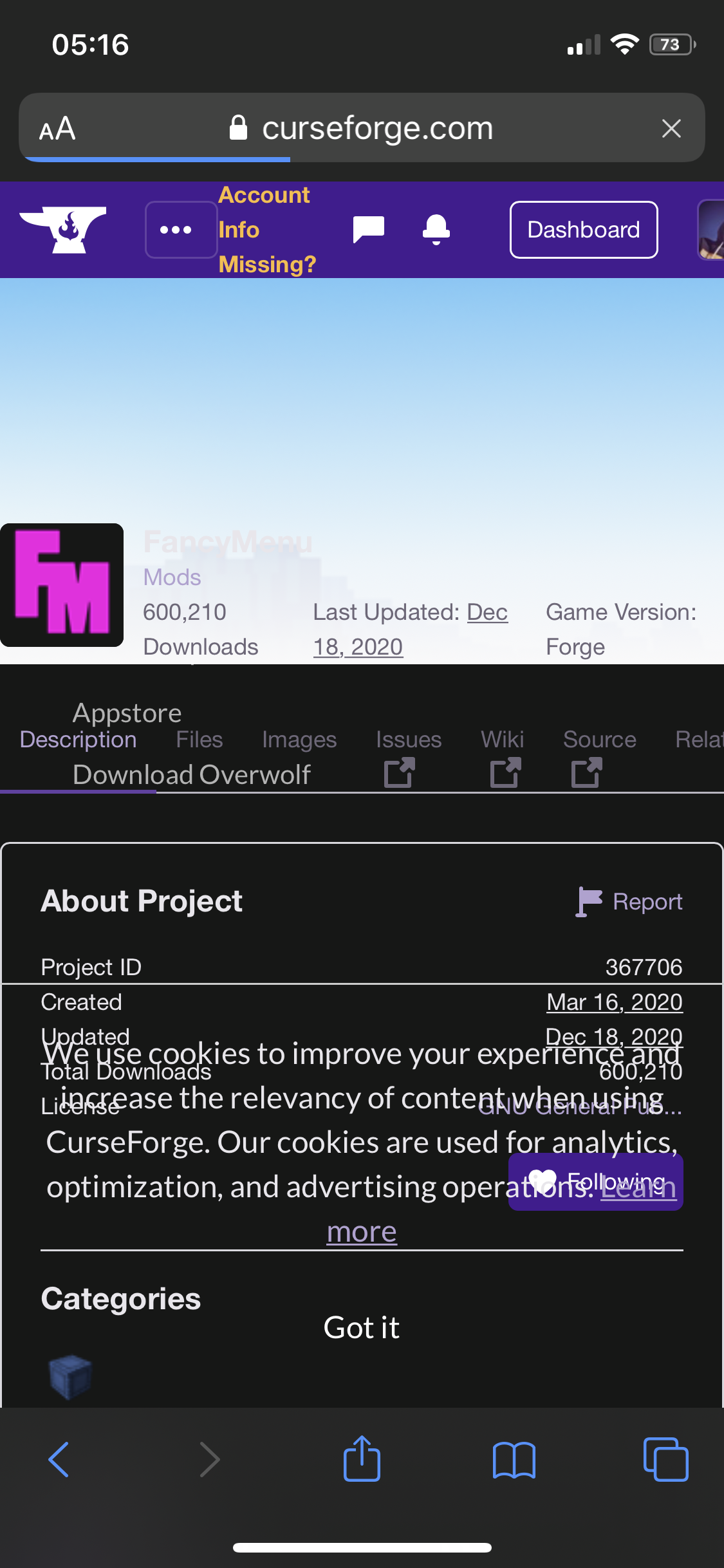
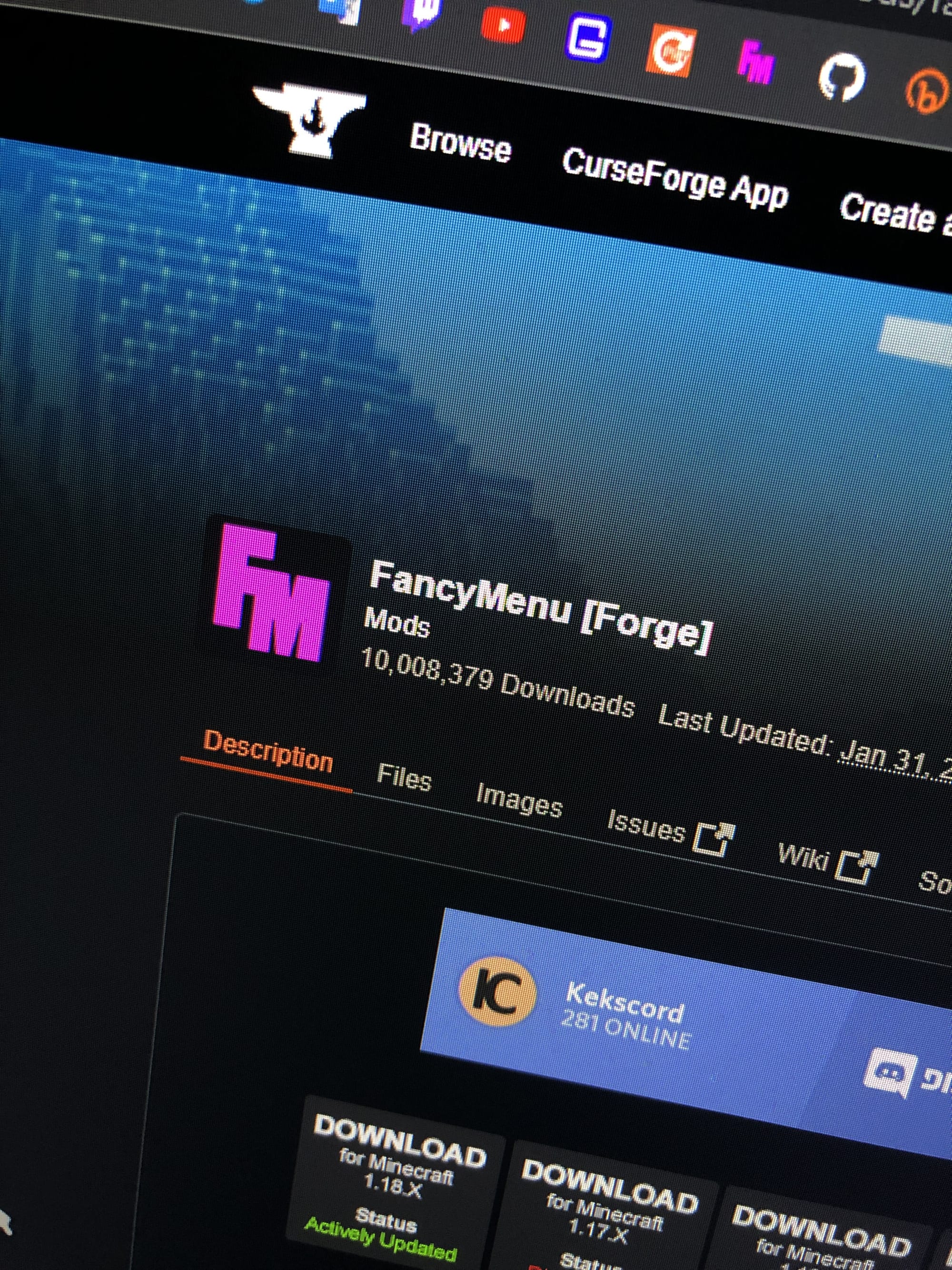
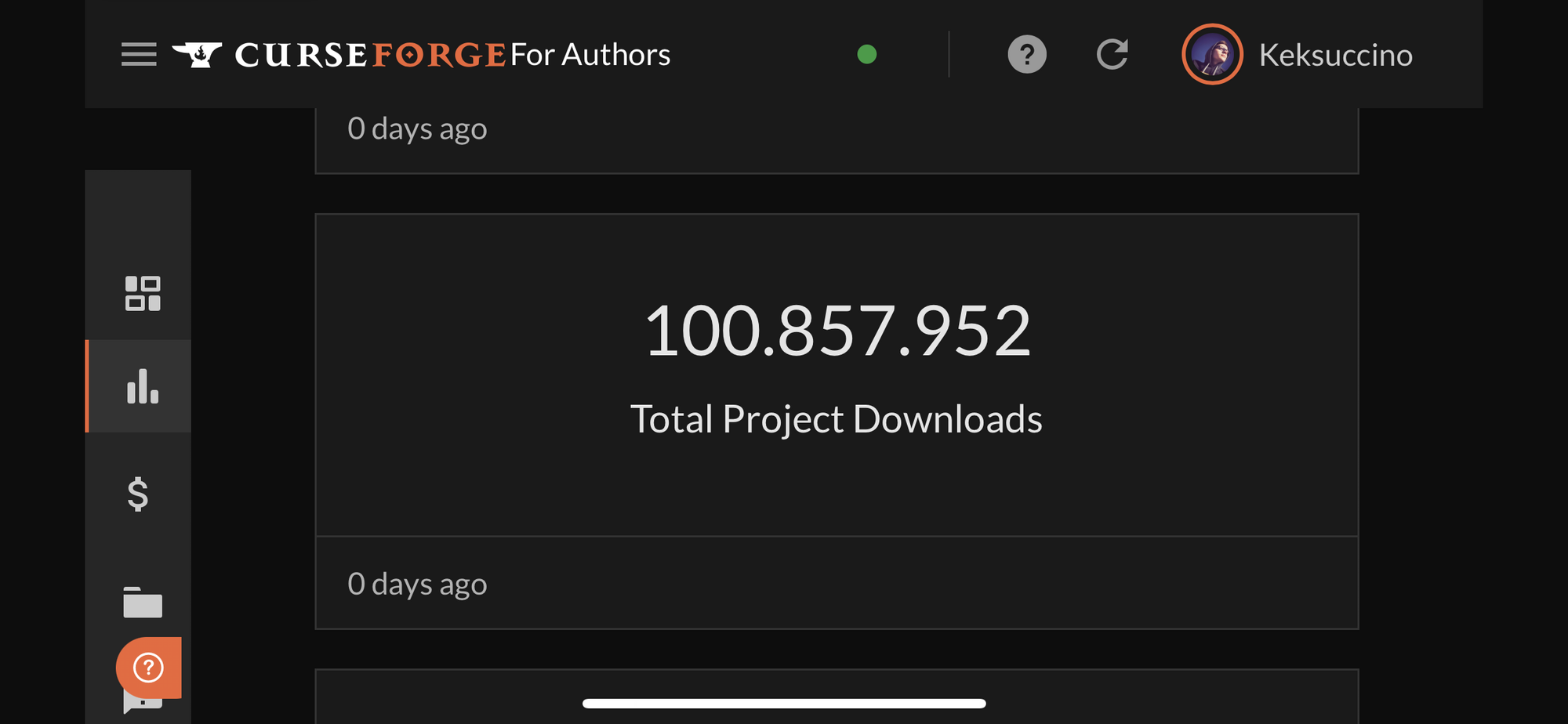
Some of Keksuccino's FancyMenu download milestones screenshots
I still remember, and even have screenshots of the moments I reached 100, then 1K, and then 20K downloads on FancyMenu. I also remember how incredibly happy I was when I noticed I was now making around 5 bucks per month from modding, which felt so, so good, since I needed literally every cent at the time. If Keksuccino from back then saw the 1-billion-download count, his brain would probably throw a blue screen.
If you told Keksuccino from 7 years ago that he would have 1-frickin-billion downloads someday, and that his mods would be in basically every modpack, he just wouldn’t believe it.
Other big modders will probably say the same, but at some point, you disconnect yourself a bit from all the numbers, for the reasons I mentioned, and also because keeping the same connection you had at the start would make your brain explode. 1 billion is an incredible number, and without all the great people who use my mods every day, this wouldn’t have been possible. I am extremely thankful to all of you for giving me the chance to do what I love as my job! Thank you!"
What first drew you into Minecraft modding, and what made CurseForge the home base where you chose to share your work with the world?
"I actually learned to code just for modding Minecraft! My first contact with modding wasn’t really “modding” though, because I started with Bukkit plugins back in, I think, 2016.
At the time, I was playing a lot on Minecraft minigame networks, and I wanted to know how they managed to add all these custom game mechanics and modes without me having to install anything on my side. Coding and Minecraft modding were completely new to me back then, so this was super fascinating and made me really curious.
So, I opened YouTube, watched tutorials on how to make Bukkit plugins, and started following them with zero coding knowledge... Every developer reading this just cringed super hard, by the way, and that’s because everyone will tell you to never try learning something like Bukkit before you know the base language, which is Java in this case. I’m totally on their side with this, but I don’t regret anything!
Without Bukkit, I probably wouldn’t have started learning how to code in the first place. That being said, the first time I tried to learn coding with said Bukkit YouTube tutorials, I got completely overwhelmed and didn’t understand ANYTHING. I figured I was just way too dumb for all that coding stuff, so I dropped the idea and went back to playing Minecraft Skyblock... until I thankfully made a second attempt, again with Bukkit, but this time it clicked! I finally understood the logic behind programming languages, which was the important thing here.
After that, I kept learning Java while playing around with small Bukkit plugins for private servers that my friends and I used. Then my first real mod followed! Back then, I was a supporter on a German Minecraft server called “Cytooxien”, and my fellow staff members and I were missing some QoL features that would have made it a lot easier for us to help users, so I tried making a mod that did exactly that! Coming from 100% Bukkit to Forge for the first time was terrible, by the way, but explaining why would turn this into an actual book, so we’d better not go there. Anyway, I actually got the mod working, and I think I was able to help the other staff members at least a bit with it, which was all I wanted!"
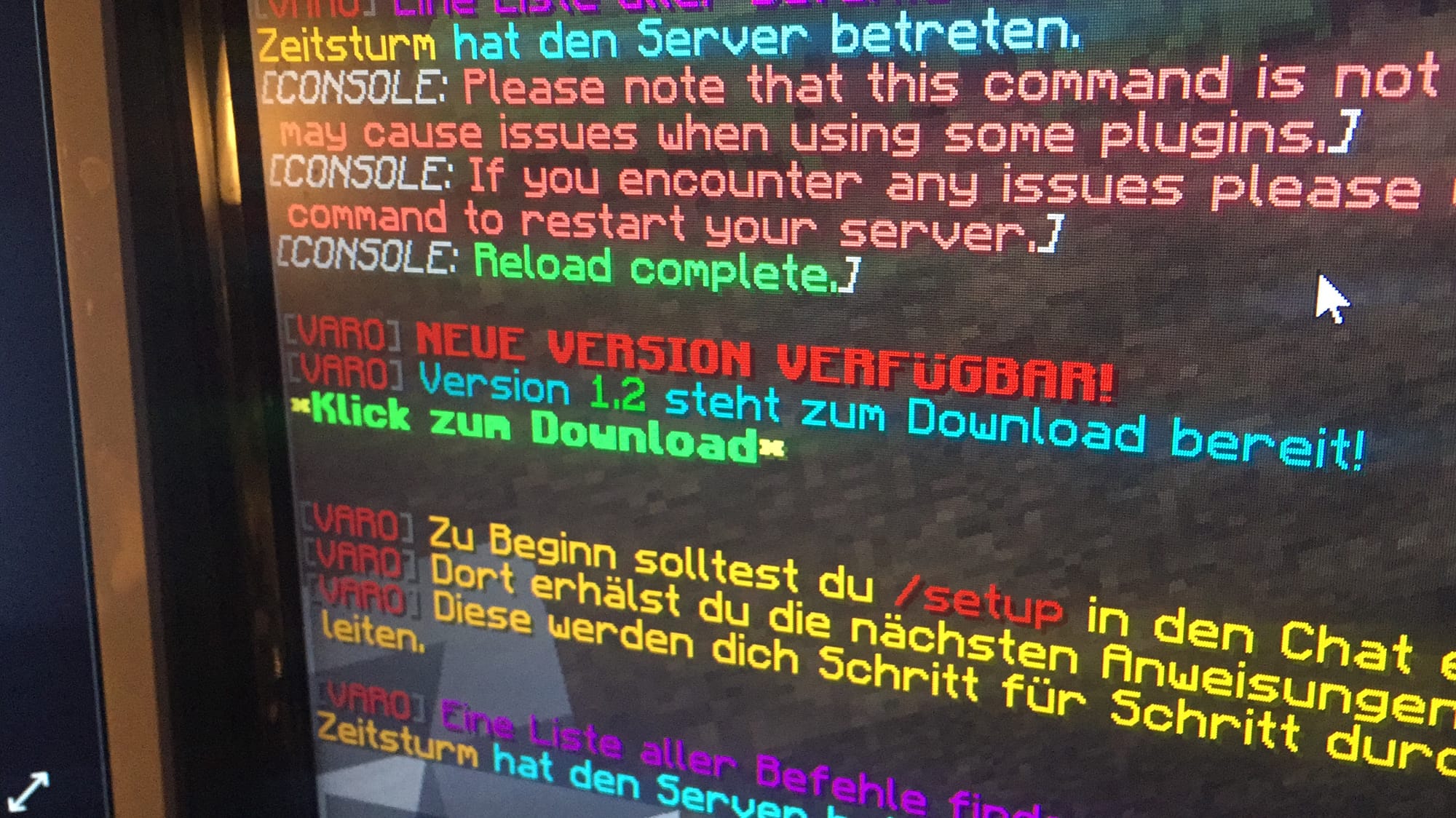
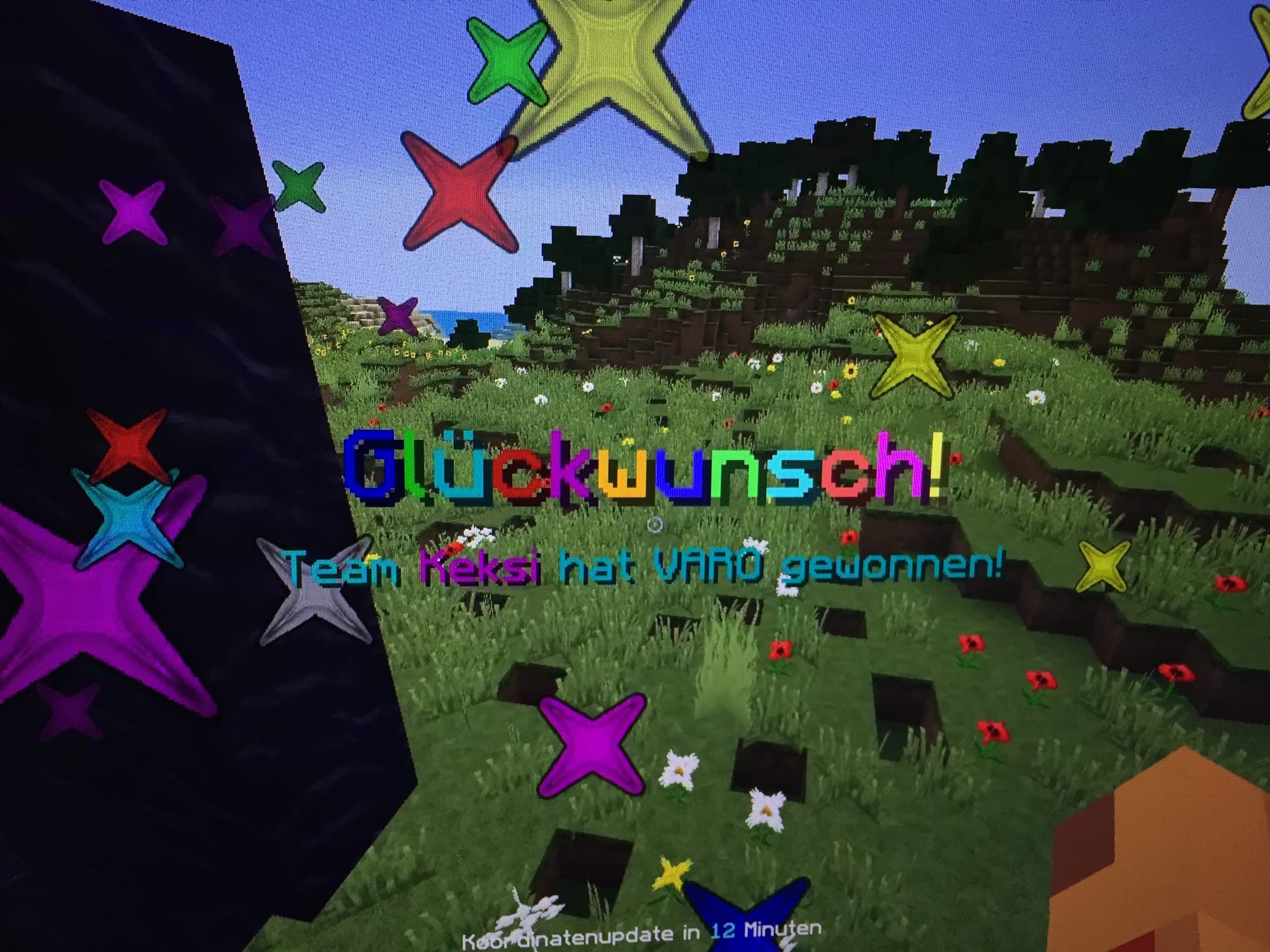
Keksuccino's first project: a Bukkit plugin for a game mode called "Varo"
"These are "screenshots" from my very first project ever! This was really the first thing I ever coded that ended up finished. It was a Bukkit plugin for a game mode called "Varo". The game mode is not made by me; I just made a custom version of it for a fun project with some friends. I'm pretty sure that Varo was only popular in Germany, so maybe not many others know what it is; basically, it is a Battle Royale. It's Vanilla, with around 10-20 people starting at the same start point (like Hunger Games), and then once the game starts, most people will run away as quickly as possible, away from others, to farm stuff for armor, weapons, and other stuff that could help in a PvP fight.
The game had no real time limit for when it forces the match to end, so a Varo game ran for multiple real-life days in most cases. The special thing about Varo is that it was made for a YouTube project originally, so to "sync" everyone's progress and not make some people play way more than others, there was a forced log-out after (I think) 20 minutes of playtime every day, so everyone could play 20 minutes per day basically (and record the gameplay and upload it to YouTube).
There are versions of Varo with teams of mostly 2 people in each team, and also solo ones. The game ended when only one team/player was left. Again, it was probably only really popular in Germany, but it was really popular, like one of the biggest YouTube gaming events back in the day!
Fast-forward to January 2020: I saw a concept for an animated Minecraft title screen on Reddit (shoutout to u/MasterJay3315). I thought, “That looks doable; let me try turning it into a mod,” and that was the moment FancyMain (yes, “Main”) came to life! I posted my proof of concept for the animated menu on Reddit, and the post exploded. People were asking me to publish the mod on CurseForge, which finally brings us to my very first project on the platform: FancyMain (FancyMenu). "
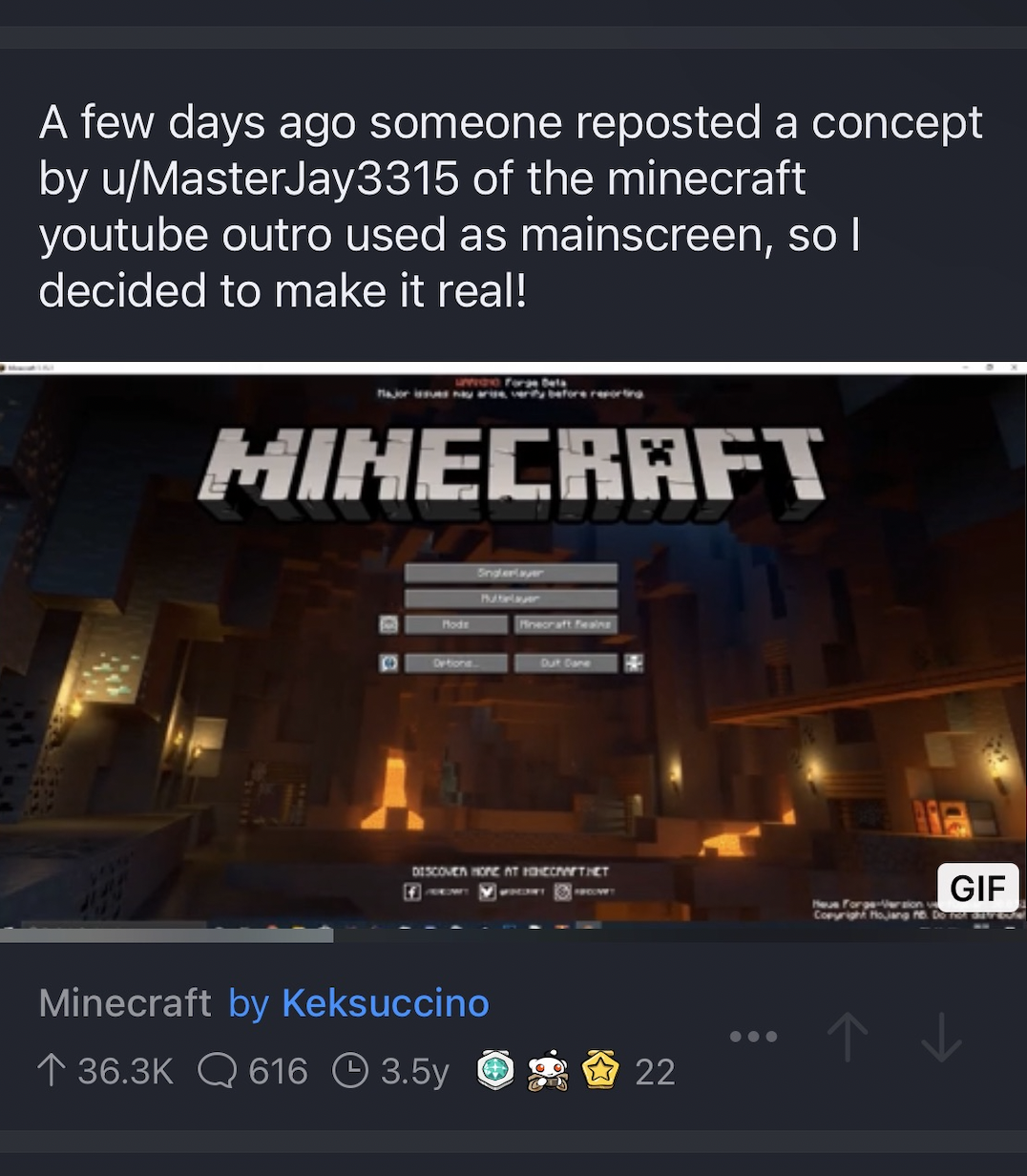
"It didn’t do much back then; it really only set a hardcoded animation as the title screen background. But I quickly got requests to make the animation customizable, then to make it work on other screens too; then people said it would be cool to also move some buttons around on the title screen, and not much later, I renamed the mod to FancyMenu! FancyMenu was born, and its UI looked terrible, but it worked!"
Supporting your mods across Forge, Fabric, Quilt, and NeoForge across rapid Minecraft updates is an immense testing matrix. What does your local testing and release pipeline look like to ensure an update works smoothly across all loaders without eating up your entire week?
"This process has improved a lot over the years. When I first started making mods for a bigger audience (aka “when I started making FancyMenu”), I had a separate workspace for every loader, and each loader had separate workspaces for all supported Minecraft versions. So basically, if I supported 2 loaders on 5 different Minecraft versions, I had a total of 10 workspaces.
To port an update to all the other workspaces, I literally copy-pasted all the code, snippet by snippet, from the source to every target. I had no clue about Git back then and didn’t know what “cherry-picking” was, or anything else that would have made this process less self-punishing. I then also manually uploaded each build to the project pages, one build per mod loader, for multiple Minecraft versions, so yeah, I basically tortured myself. Fun times!
Later, I finally learned about Git and how it can help with porting code faster, and I started using so-called “multi-loader templates” for my workspaces. These are basically pre-made workspace templates that let modders write most of their mod code only once and have it automatically work on multiple mod loaders. No template is perfect, so there are still some cases where code needs to be written for each loader individually, but most of it can be written once per Minecraft version, which already saves a LOT of time.
Different Minecraft versions are a bit more complicated. To this day, I have a separate workspace for each Minecraft version, since stuff just changes too much between them. To still make porting a bit less painful, I’ve added lots of compatibility layers over the years, so most of my code can look very similar, or even identical, across most versions, without me having to rewrite everything whenever Minecraft changes something.
All these compatibility layers and optimizations also make it easier for me to test features across versions, and these days, I have lots of automated tests in place too, which quickly let me know if something in the mod is acting a little odd or not working at all. The manual testing part is still there, though. For that, I simply run the game and test the feature on each version myself. It doesn’t take as long as you might think, but it’s still time-consuming and a little annoying sometimes."
FancyMenu completely changed the game for modpack creators, server owners, and everyday players by transforming static menus into cinematic, customized experiences. What inspired you to tackle the Minecraft UI in such an ambitious way, and what are your favorite modpacks that make the best use of it?
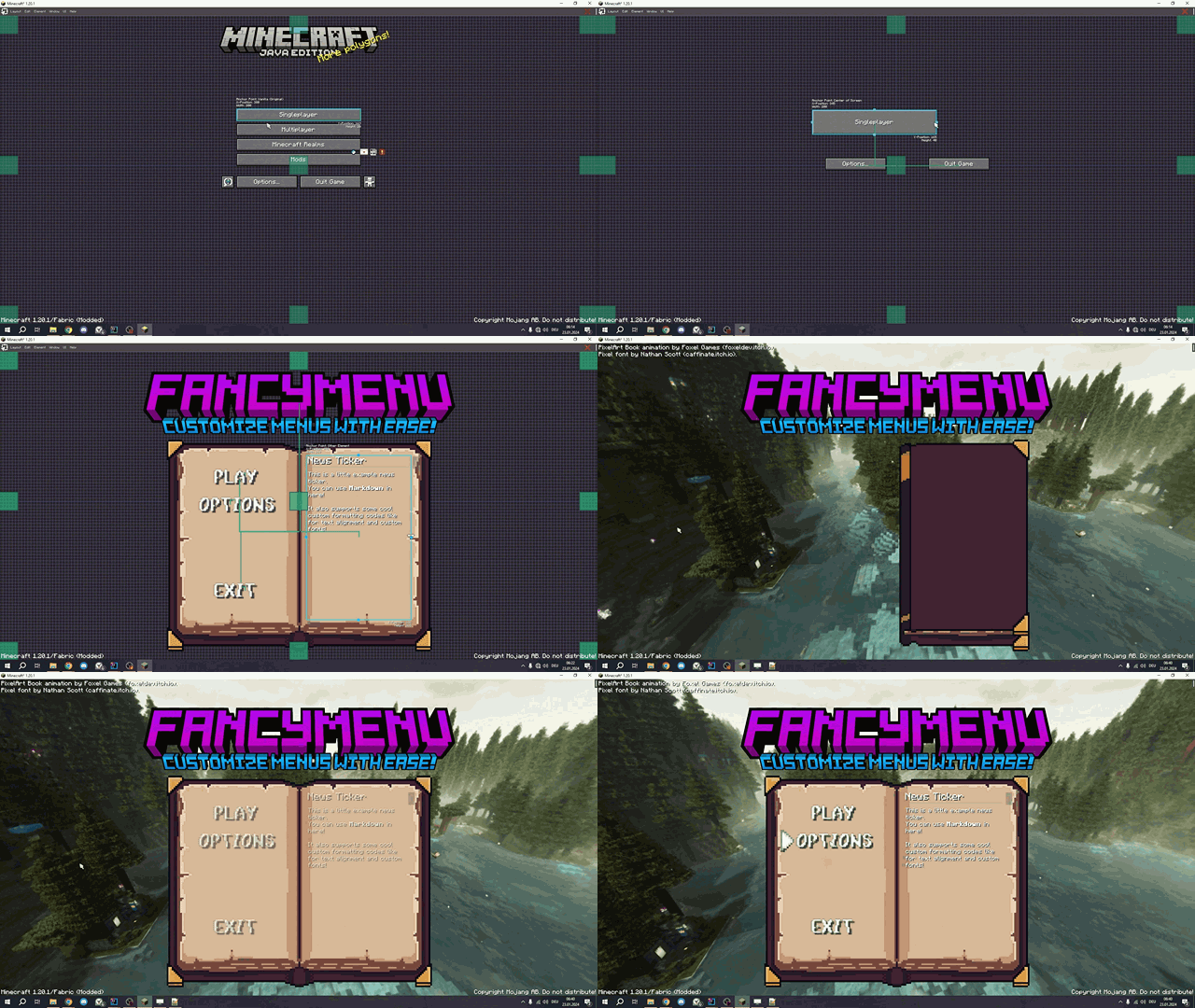
"I wanted to see if it was possible! That’s all. I realized that nobody had ever made a menu customization mod at this scale, with animations and everything. Also, no menu customization mod before it had a way to conveniently edit menus in an actual editor.
Before FancyMenu, it was all about editing text files, which honestly felt terribly user-unfriendly to me. I asked myself why nobody had done animations yet, so I tried to make that first proof of concept I talked about earlier, and it worked! Next, I wondered why no one had added an editor, so I tried adding one, and it worked! That’s basically how my modding flow works: I’m curious whether I can manage to implement feature X, and if it works, it ends up getting shipped in an update. This describes almost every feature in FancyMenu, so the answer really is just curiosity about whether I can do it.
Fun fact: This is also the reason some features take very long to get implemented. If I personally find a feature “boring”, I can’t really motivate myself to work on it, and instead I start building the next way-too-big and way-too-complicated thing that takes me ages, and in the end, 3 out of 1K users will actually use it. But that’s fine, because I had fun adding it!
As for some favorites, picking just a few modpacks out of the huge number of packs with beautiful designs is almost impossible, so instead of calling them my “favorites”, let’s just say they are some of the many modpacks with gorgeous-looking menus:"
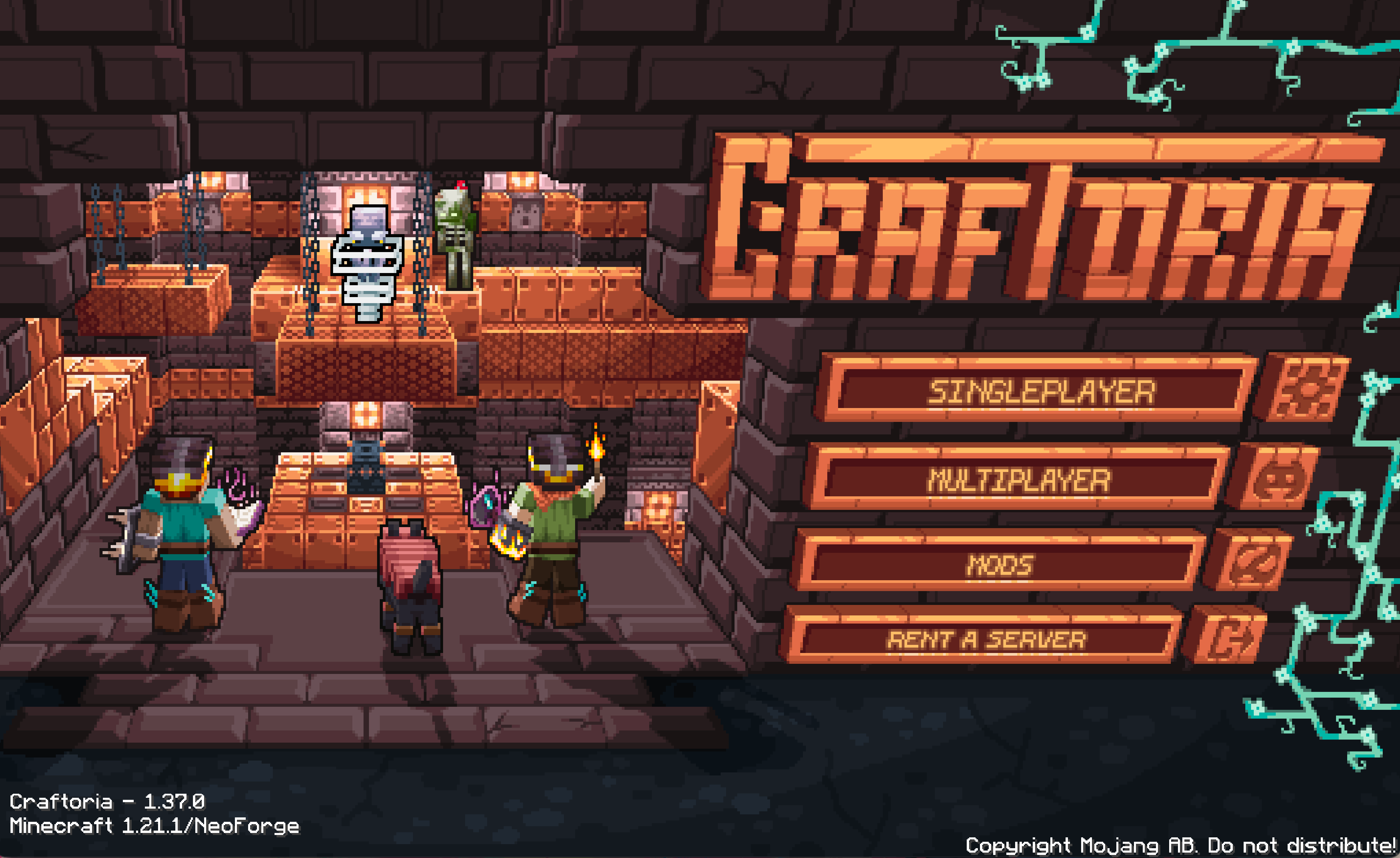
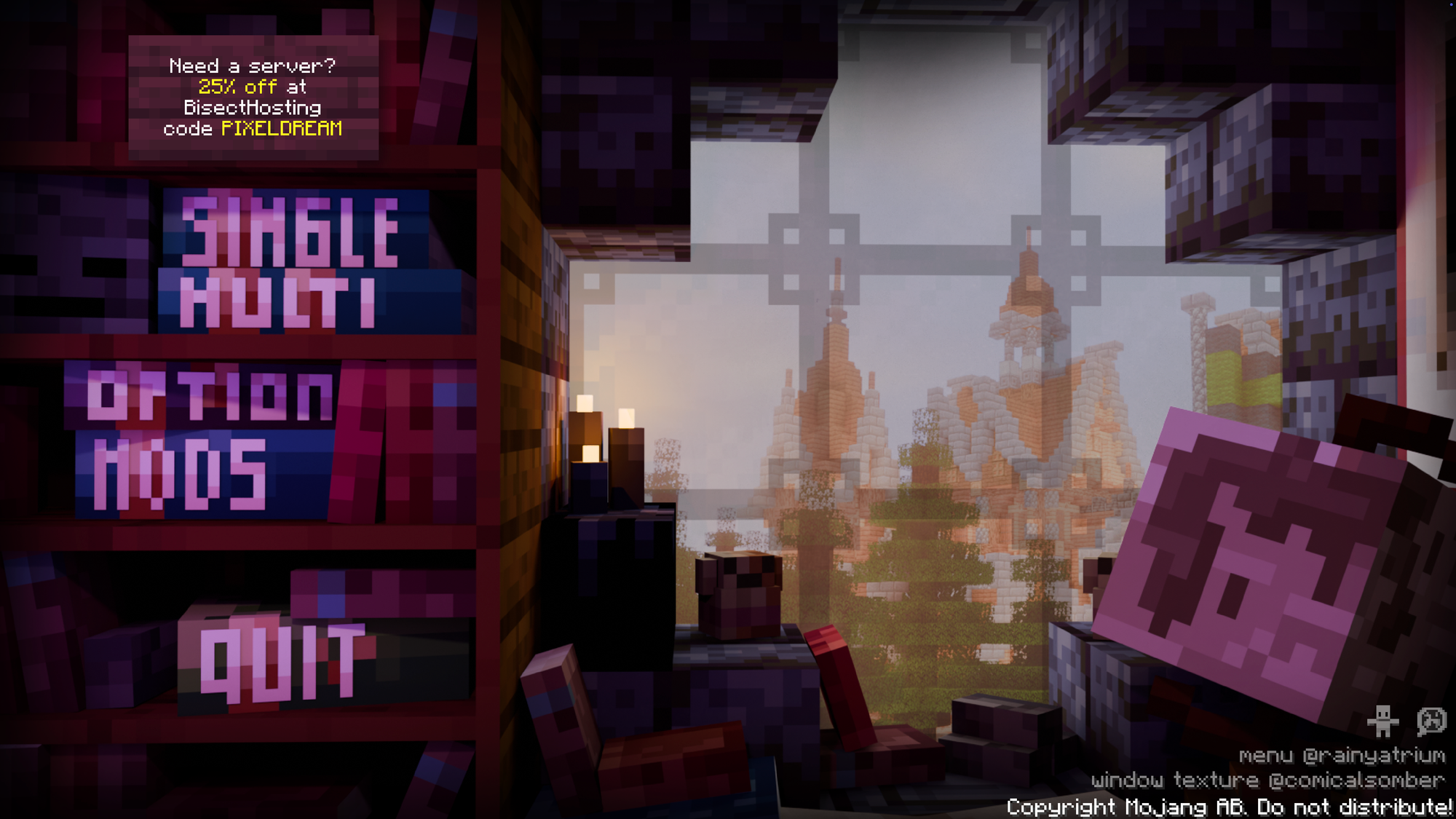
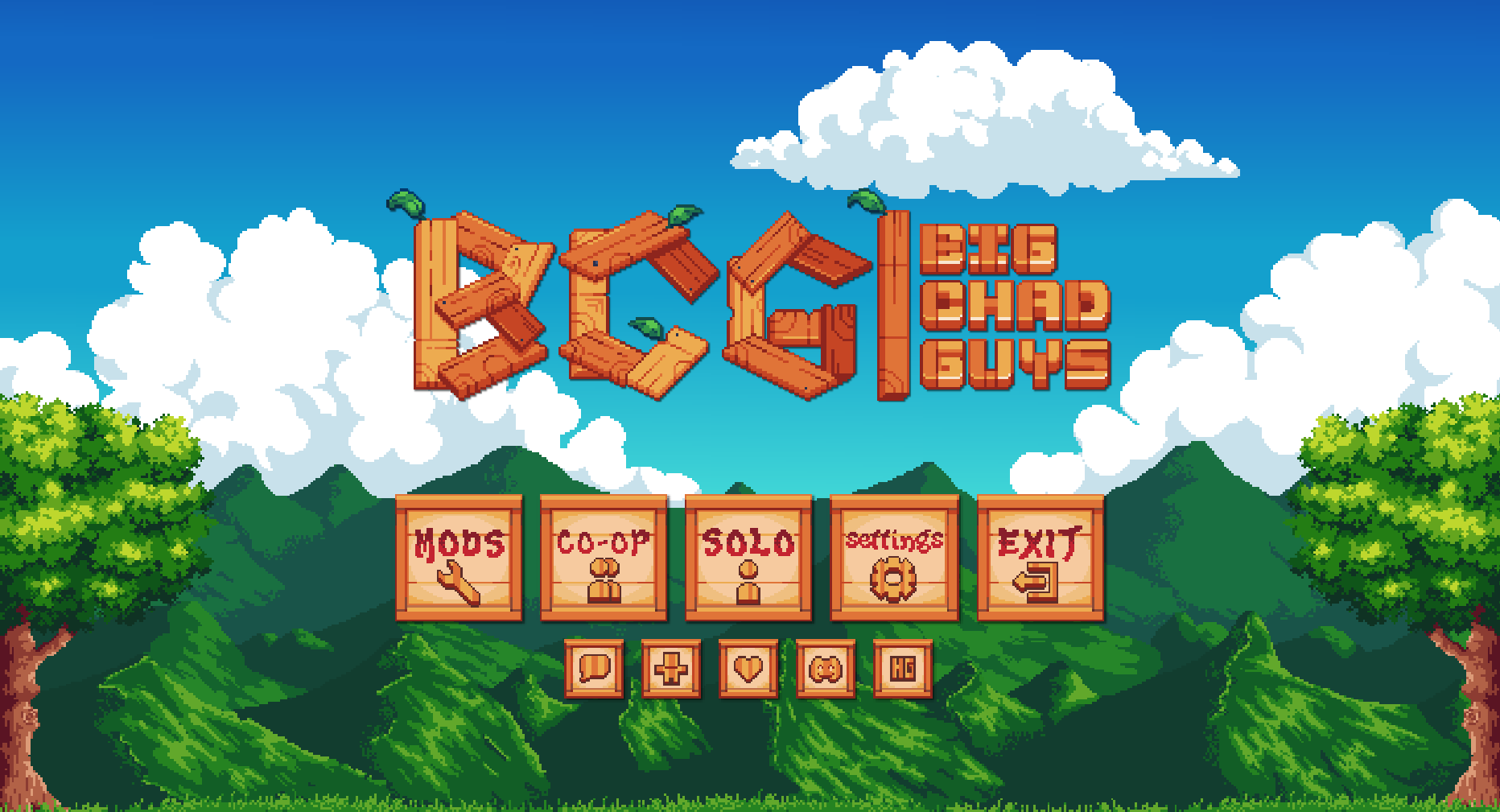
Looking across your broader development footprint, you have explored web and developer tooling (like your self-hosted docs frontend Vicky, or custom software provider extensions). Do you see yourself primarily as a software engineer who happens to love Minecraft, or as a gamer who picked up coding to solve game problems?
"That’s a surprisingly difficult question. I do see myself as an actual software engineer now, sure, but the reason I started learning to code in the first place was Minecraft, so without Minecraft, or without being a gamer, I wouldn’t be a software engineer today.
Let’s say that Minecraft made me start learning how to code, but since then, I just kept growing from a gamer who was interested in how things work into a software engineer who still happens to mainly work on Minecraft-related things to this day.
I also do other stuff, but since FancyMenu and modding in general became my full-time job over the years, it’s kind of difficult to focus on non-Minecraft projects. That’s completely okay, though, since I still love working on mods and coding in general. It’s one of my favorite hobbies, but it’s also my job!"
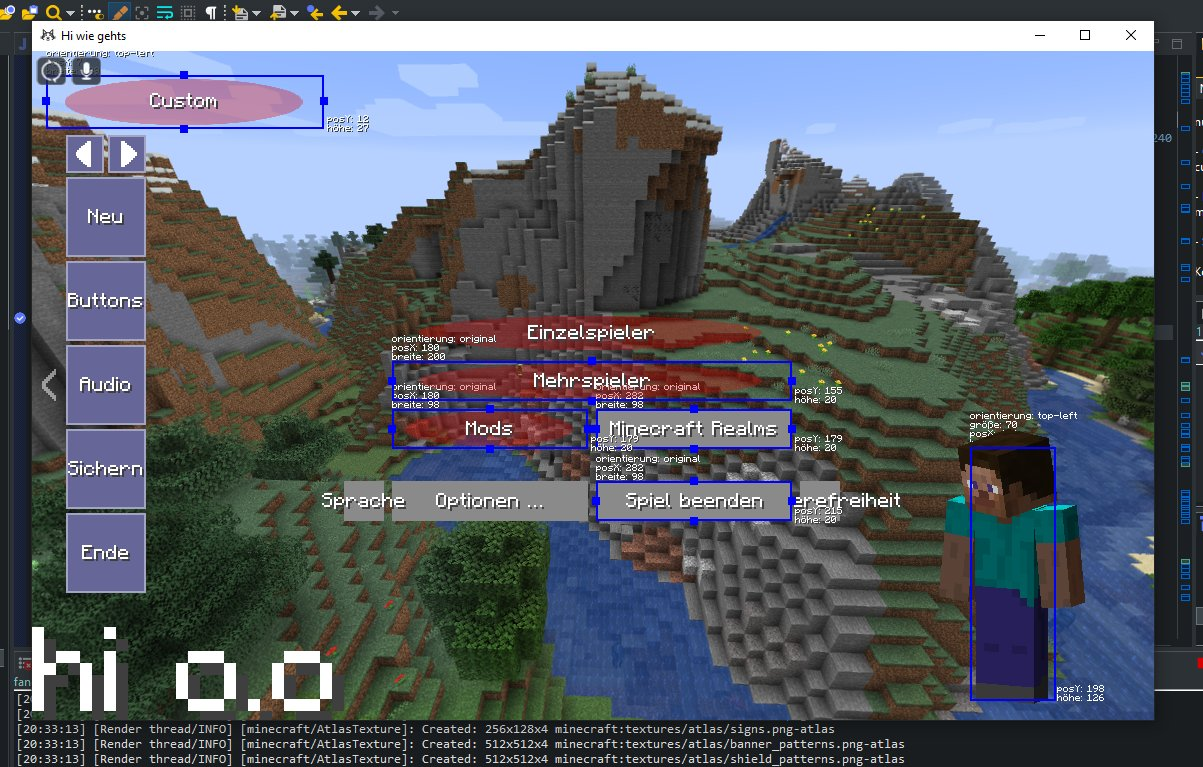
FancyMenu’s current UI is the result of many years of improvements, reworks, and tons of feedback from my great community.
Your projects emphasize aesthetics, clean layouts, and smooth UX. Do you have a background in graphic design, web development, or UI/UX outside of modding, or did you learn interface design entirely on the fly?
"Well, the thing is, I actually completely suck at UI design, haha! I’m terrible at it and always have been. I said it earlier, and I’ll say it again: I’m not creative, so making the front-end parts of FancyMenu was really difficult for me, to be honest.
FancyMenu’s first UI was a nightmare that not even a mother could love. The second one wasn’t as horrible anymore, but still bad enough, and the third one, which came with FancyMenu v3, finally started looking like something I personally felt proud of. It was still very basic, but it looked okay. The current UI is version 4. It was another complete rework, so it once again brought upgrades and a better design.
What I’m trying to say is that FancyMenu’s current UI is the result of many years of improvements, reworks, and tons of feedback from my great community. I think it just happens to be very polished because of all that, not because I’m particularly good at UI or anything.
— Keksuccino (@keksuccino) April 8, 2020
An old Twitter post of the very first demo/prototype of FancyMenu's layout editor. Before that, it only had text-based menu customization.
Everything I know about UI design and software development in general, I taught myself, but UI/UX has always been the hardest part for me, because I feel way safer doing back-ends. I like the logic part of programming, not so much making UIs, because building UIs that feel good and “natural” is very difficult. There is so much stuff in people’s muscle memory that you just don’t think about when designing a UI, and what makes it even worse is that most of the time - you don’t even notice it when clicking through your UIs for testing. The only way to notice these things is by actually using the UI, not just navigating around in it while your brain is in “dev mode”.
Once you start doing a real task that requires you to navigate the UI, you will get hit with so many things that feel “off”, like realizing you would normally do something a different way, or looking for a feature somewhere you never put it and realizing it would actually be better in that particular place, and so on.
Good UI design is art, and making good UIs requires a lot of skill! The ones who are REALLY great at UI design are basically all FancyMenu users, or at least it feels like that. For real, everyone is making these INCREDIBLE designs with my mod, which always makes me so, so happy.
Some people will know that I’ve had literal “how the hell did you do that?” moments with some layout creators who managed to pull off absolutely CRAZY stuff. I honestly have no clue how some of these amazing designs were made, and that’s with my own mod, so that means something. The following design, for example, was posted on my Discord server just 2 days ago by the talented Kumo!
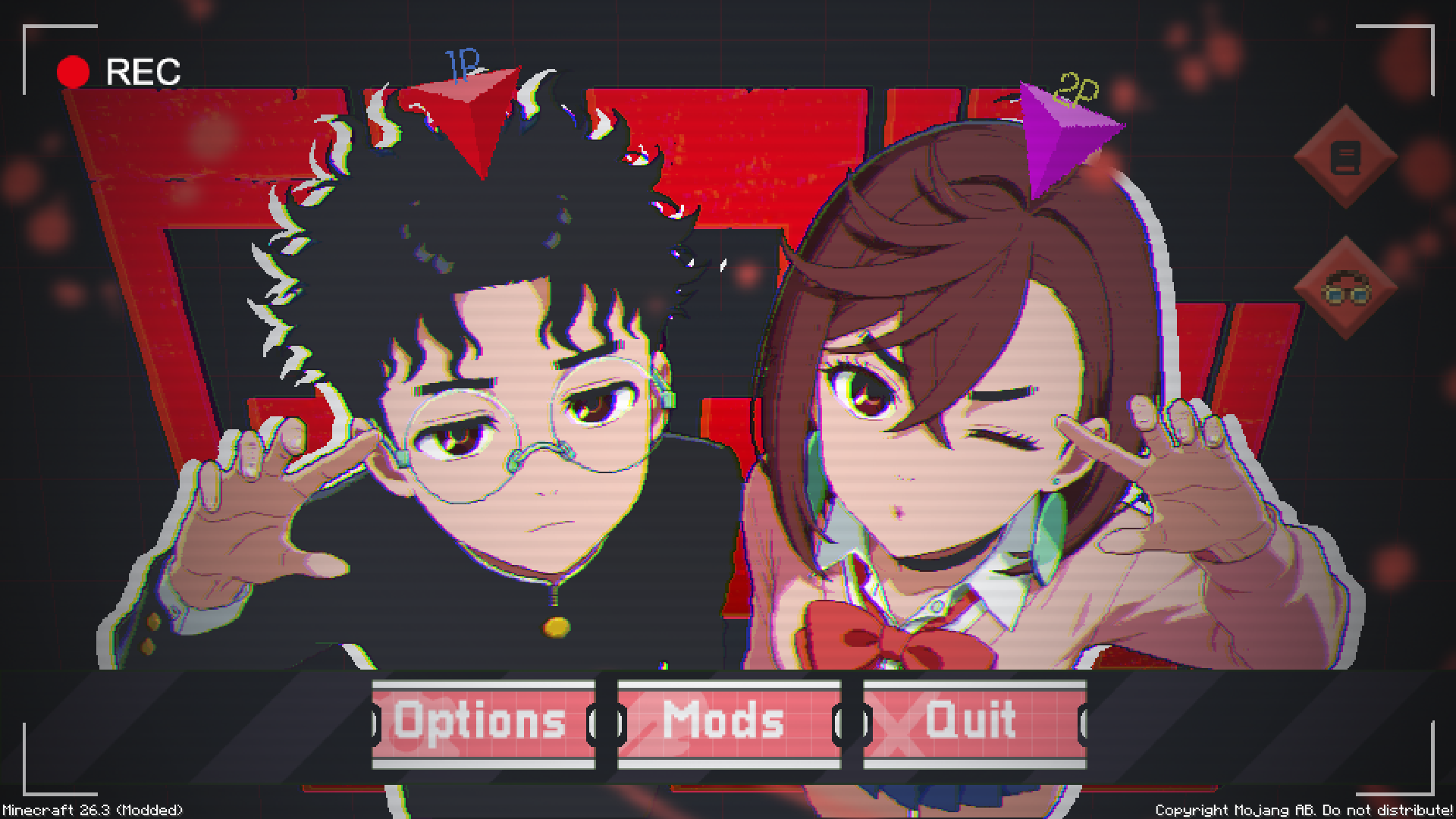
I see crazy-good menus casually getting posted on Discord basically every day. I can’t use the word often enough: It’s completely crazy how talented my community is, and I love everything about it!
Over the years, there were people who turned complete, literally “hand-made” scenes into FancyMenu menus, and by “hand-made”, I mean they built an entire diorama on their physical desk, took tons of photos of it from different angles, and then combined these shots into a 3D parallax space inside a menu. It even reacted to a light source at the cursor, because they also took a second, lit-up version of each photo by shining a flashlight at the spot. Shoutout to “Anki” for making this and many more beautiful creations.
Anki's FancyMenu layout for an airship modpack, which lets you explore a very large cave
Others got simple versions of Doom and Super Mario running in menus. Not by streaming the game’s frames into the menu, but by remaking parts of the actual games purely in FancyMenu. People are crazy skilled at UI/UX design, and I love every single creation they share with me. It puts a smile on my face every time.
Also, since we’re talking about skilled creators, I want to mention one very special person: UwuCookies. She was an incredibly talented UI/UX designer from Japan who made beautiful designs with FancyMenu, and she even used FancyMenu for her final university project, since she was studying UI/UX design!
She was a wonderful person, but sadly, she passed away in early 2025. Since then, I’ve been trying to make sure she’s never forgotten by preserving her work and telling people about her. So here are some of her lovely menu designs:
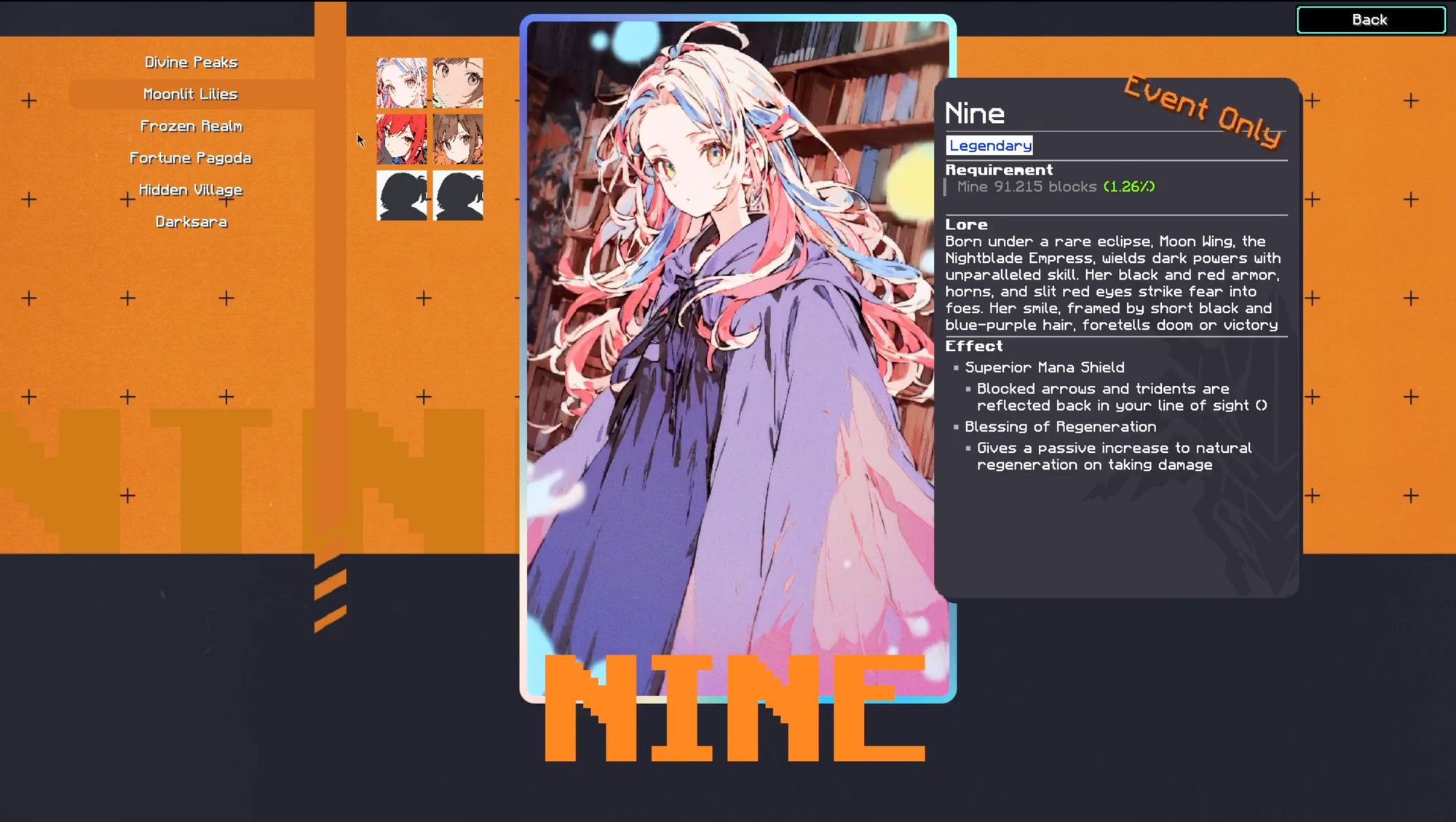
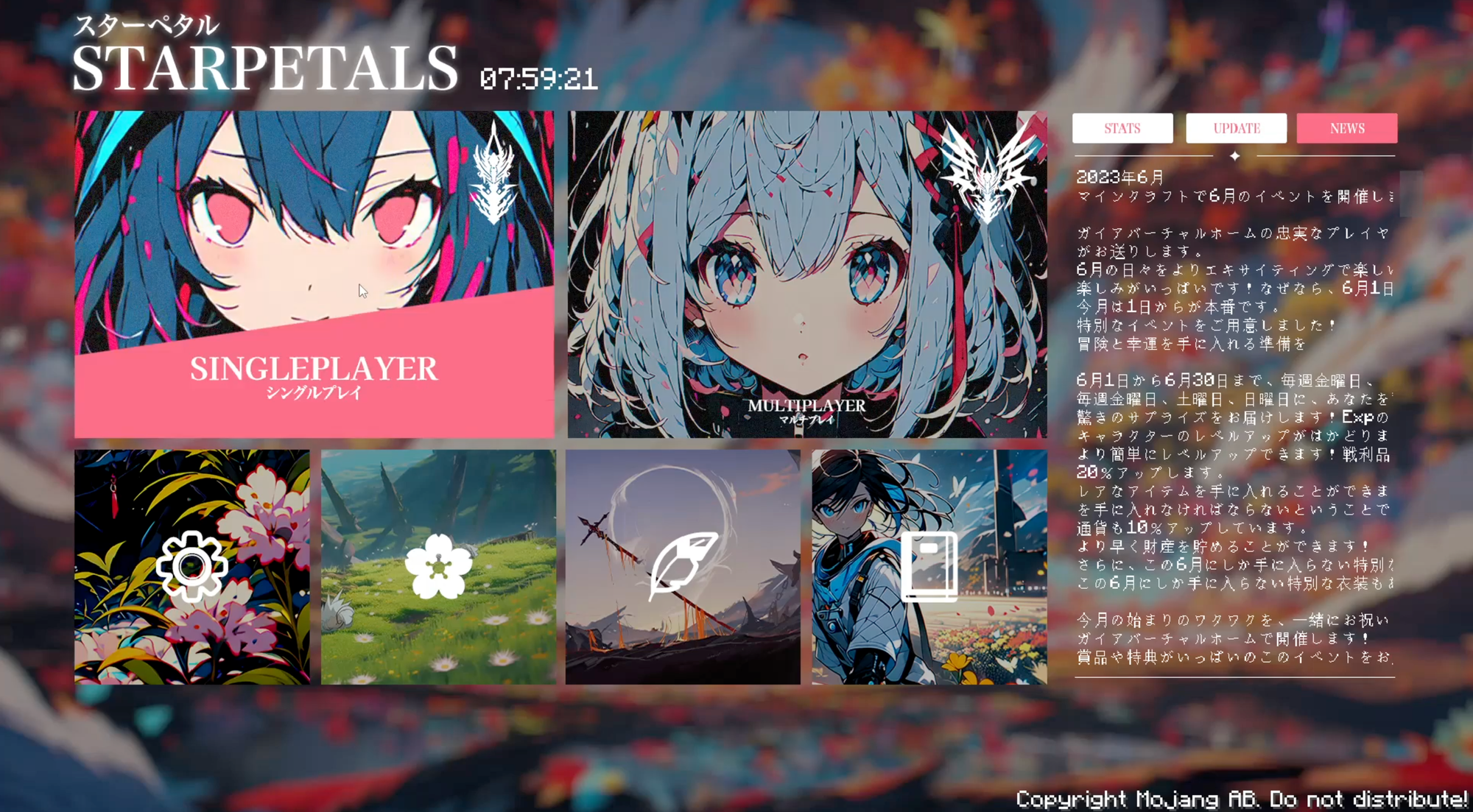
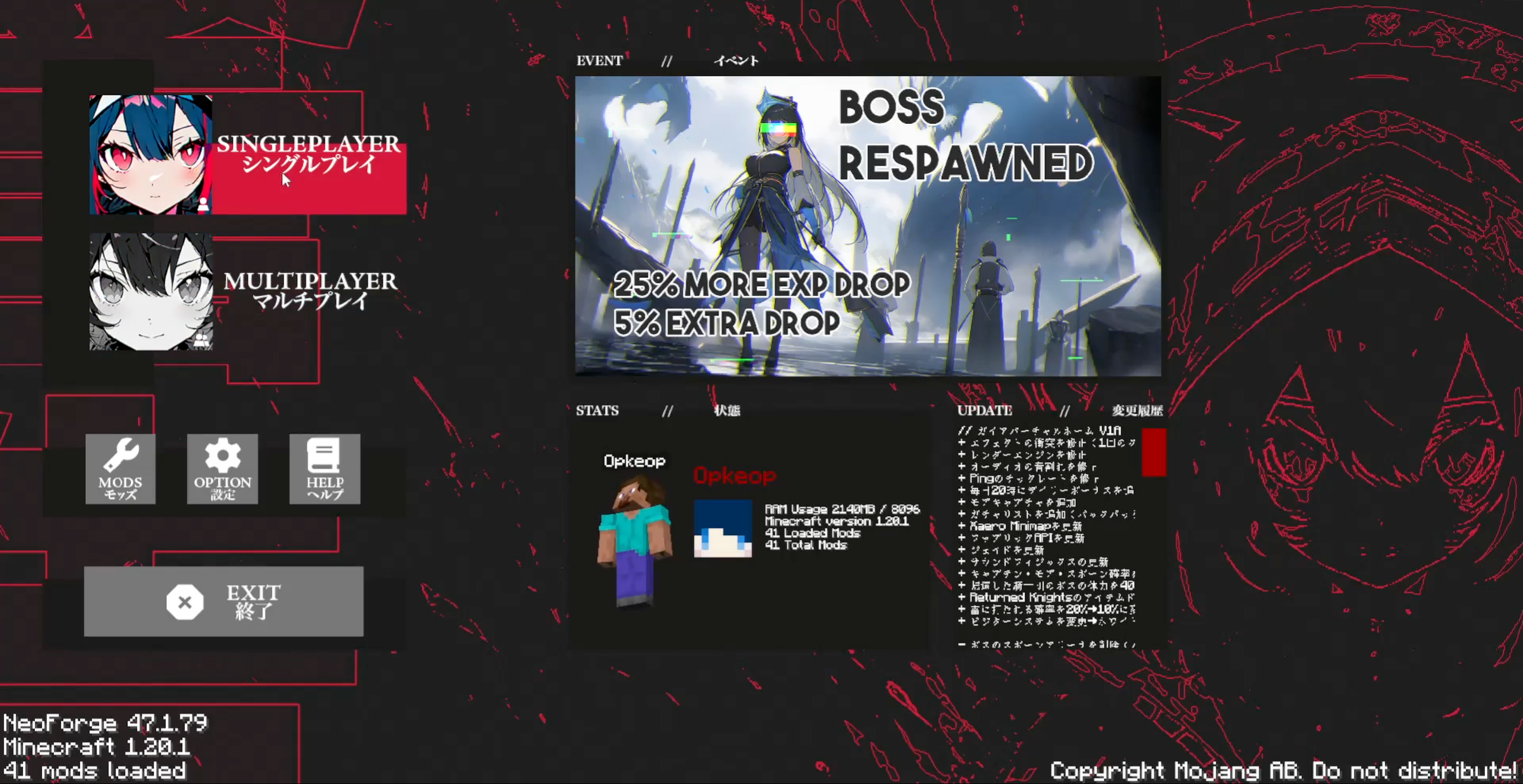
You are actively involved with major modpacks (including co-authoring and maintaining packages like The Pixelmon Modpack). How does being directly involved on the modpack assembly side change your perspective compared to building isolated mods?
"I have to clarify at this point that I’m not really involved in the Pixelmon modpack project. I’m on the contributor list because the Pixelmon team is a bunch of great individuals who decided to give me a small share of their monthly ad revenue by adding me to the project, as a thank-you for helping them set up FancyMenu in their pack, fixing bugs in my mod that surfaced while they were making the Pixelmon menu design, and so on.
Back then, I worked closely with the Pixelmon team for a while to fix all the issues they found while making their menu layouts (they made one of the first more complex layouts basically; that's why lots of bugs showed up, that were previously not an issue for the mod).
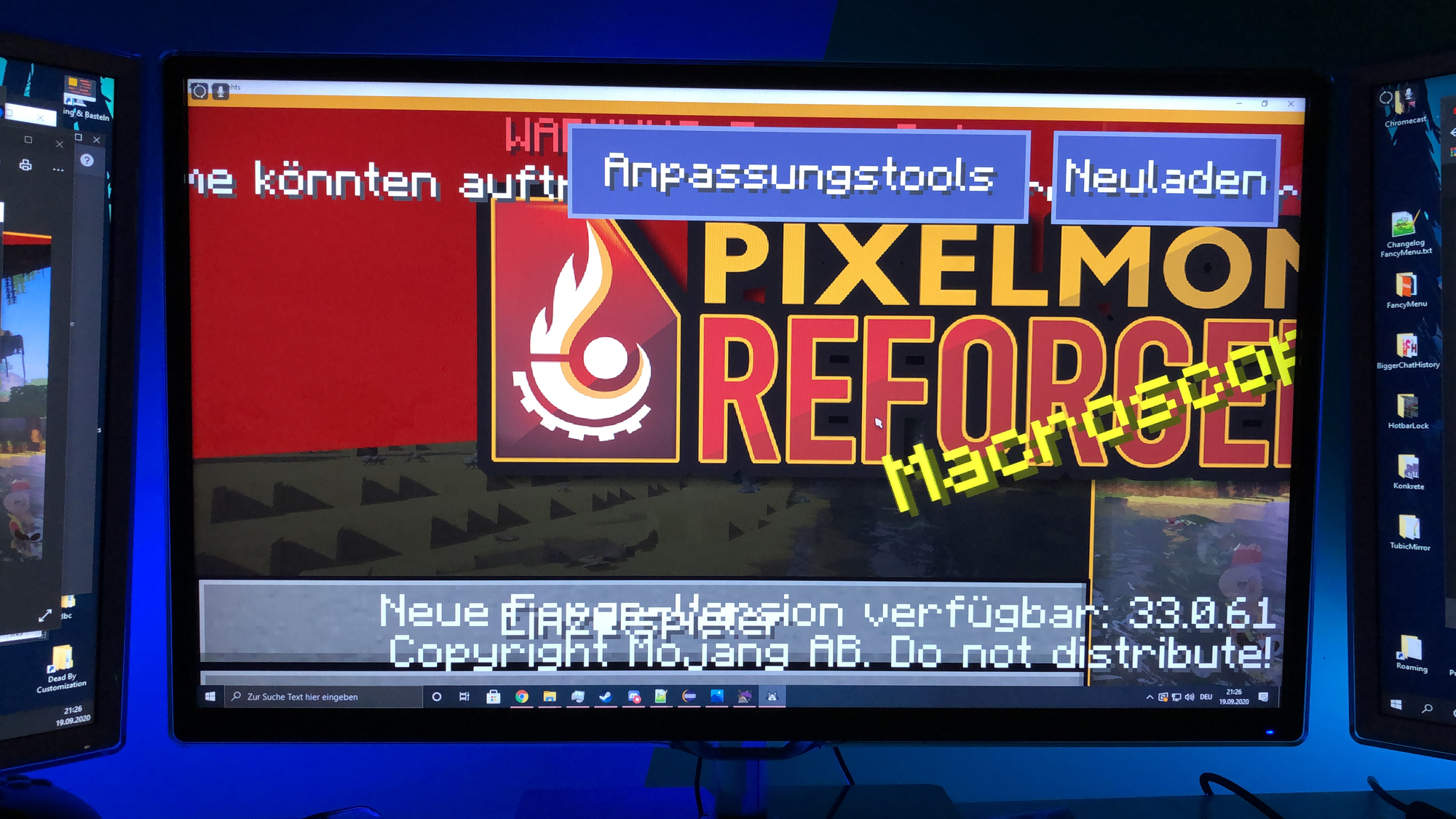
But yes, you could say that I’m “involved” in some way in basically every modpack these days, because FancyMenu is in almost every modern pack. That’s a really big responsibility, and thinking about it can be a bit scary sometimes. A little “oopsy” from me in an update could harm tons of modpacks, for example by deleting or corrupting worlds. Even though my mod focuses on the UI side of the game, it’s still part of the game, so a mistake in the wrong place can cause a lot of damage.
That’s why I’m extra cautious about the things I implement and release, and for bigger updates, I always run a Closed Beta phase with some of my “power” users first and tell them to try everything they can to break the mod! Without these Closed Betas, some very critical bugs would have hit a lot of users in the past, so if I can give other devs one piece of advice, especially big company devs *cough*: Do not skip QA and beta phases! They can save lives, at least virtual ones. Nobody wants to be the reason someone’s dog or cat got deleted!"
I’m currently working on a not-yet-released mod that could make lots of people who like photo modes in games very happy!
With 1 billion downloads in the rearview mirror and the highest tier achieved, what is currently catching your eye? Are there new features, brand-new projects, or upcoming Minecraft mechanics you’re eager to experiment with?
"Good question! With FancyMenu, I’ve actually reached a point where I’ve stopped adding big new features for a while, after releasing two gigantic updates for it.
First, I want to make it as stable as possible, to have a solid base across multiple Minecraft versions, and then I’ll start adding completely new stuff again. Until then, I’ll just expand existing features and fix lots of bugs!
But that doesn’t mean I’ve stopped experimenting completely. I have some other mods too, and one of them is “Just Zoom”, which got a full rewrite with lots of new features and improvements just a few weeks ago! At the same time, I had an artist make a new banner and icon for it, and I made a trailer and a mod overview video, so people can easily understand how everything works.
Also, I’m currently working on a not-yet-released mod that could make lots of people who like photo modes in games very happy! Just a little teaser of what the future might bring!"
Outside of Minecraft, you created projects such as custom provider patches for macOS developer tools. How deeply are you exploring developer utilities, software patching, and AI tooling beyond the gaming sphere?
"This is a risky thing to say these days, but I like AI technology a lot. Modern AI is basically the biggest and most exciting thing that has happened to humanity since we figured out how to make use of electricity, built the first computer, and traveled to the moon.
People often jump on the “AI bad” train very quickly, which makes sense, since they basically only hear negative things about it and mostly experience poorly implemented chatbots that drive them crazy, so it’s completely natural to start hating the technology. But what most people almost never hear is that AI can also be super helpful in lots of ways, and it can, and will, help us achieve so many good things in the future.
Experimenting with AI is one of my favorite things to do these days, and seeing how fast LLMs and other types of AI evolve is mind-blowing to me. It’s super fascinating. This doesn’t mean I support all the “slop” people make with AI. The problem isn’t having AI assist you with your projects; the problem is letting AI do everything without knowing anything about anything. You can’t make a good product of any kind if you don’t understand how it’s made.
This is the case for LLMs, and it’s also the case for generative AI (images, videos, music, and so on). All of these types of AI can actually be a really helpful tool for people, but you can’t expect them to make something good for you unless you’re the one behind the concept and “soul” of the project.
For example, you will always end up with a sloppy app if you have no clue about UI design, code logic, databases, and so on. AIs, at least the ones we have today, are far from good enough to think about every little detail, even though they already make incredible things. AI is meant to be used as an ASSISTANT, something that helps you with YOUR work; it’s not meant to do all the work for you.
The same goes for generative AI. I know multiple great artists and designers who use generative AI nowadays to turn a rough concept into something tangible that they can later develop into a proper final result. They don’t let the AI do all the work, but use it as a tool to get quick visual or auditory feedback on a concept or idea they had, without wasting hours on something that might end up looking or feeling terrible. If you use AI correctly, it can help you so much and let you get stuff done much faster, without it producing "soulless slop".
And to answer a bit more of the actual question: Yes, I LOVE exploring AI tooling and what today’s AI models can do with compiled software.
For example, right now I’m experimenting with AI-assisted game decompilation, more specifically reverse-engineering older console and handheld games for preservation purposes!
It’s really amazing what current models can already do, and people always need to remember that today’s AI capabilities are now the baseline. It can never get worse than this again; it will only get better, with even more advanced models in the future that could help us solve and do things we thought we would never be able to do, or at least not for a very long time."
The problem isn’t having AI assist you with your projects; the problem is letting AI do everything without knowing anything about anything.
Much of your work revolves around redesigning how players interact with Minecraft before they even spawn into a world. What is your fundamental philosophy when evaluating user experience in gaming menus - what makes a menu feel satisfying rather than tedious?
"I will answer this with two examples: First, for years now, people have been asking me for a way to make the game’s loading screen (via Drippy Loading Screen) wait for an animation to play out before the game finishes loading. This is terrible UI design, and just thinking about it makes me mad, so I never added this “feature”, and I never will.
Animations should never take priority over interface responsiveness, and the UI should never make you wait for animations to finish. If an animation makes things take longer in your UI, you made a bad UI and need to fix that. This may sound a bit harsh, but it really is super important not to annoy your users with things like that, because they will stop using your stuff if it gets on their nerves.
The second example is the copyright notice on Minecraft’s title screen. This is by far THE most-requested thing in 7 years of FancyMenu. People want to get rid of Mojang’s copyright text on the title screen, but FancyMenu has always done everything it can to protect this notice, so it can never be fully removed. The problem with this specific thing is that, obviously, not many people will tell me when they find a way around it, so keeping up with blocking every way of hiding that darn little text is surprisingly difficult!
For me, it’s important to keep it there, because removing it is, first of all, morally and legally questionable, and it also just feels super disrespectful, which, funnily enough, matters even more to me than the legal side in this specific case.
Removing someone’s “signature” from their creation feels nothing but wrong to me, and I would feel very bad if someone did that to my creations, so I always try my best to treat other people’s work the way I’d want mine to be treated. Remember, you didn’t make the game just because you replaced its menu! You made a beautiful design, and you deserve credit for it, so you can always add your own signature to the menu, but don’t remove other people’s signatures."
Keksuccino’s journey from publishing his earliest utilities to reaching one billion downloads proves that focusing on quality, reliability, and community needs can leave an indelible mark on an entire gaming ecosystem.
Achieving the Anvil God tier is a rare honor, but watching creators continue to build breathtaking menus and modpacks with his tools is the real reward. We want to extend our heartfelt congratulations to Keksuccino on this milestone, and we can’t wait to see which boundaries he redefines next.