In the world of Minecraft modding, few names carry as much weight, legacy, and sheer technical brilliance as McJty. If you’ve ever automated complex item routing with XNet, tailored custom mob spawns using In Control!, or simply enjoyed a massive modpack running seamlessly on McJtyLib, you’ve benefited directly from his craft. Having recently crossed the monumental 1-billion-download threshold to earn the elite Anvil God rank in the CurseForge Legends program, McJty stands as a true titan of our creator ecosystem.
We sat down with the mastermind behind some of the most indispensable tools in modded Minecraft to discuss his journey, his design philosophy, and what it takes to power the playstyles of millions worldwide. Here are 10 questions with McJty.
You can browse McJty’s complete catalog of over 40 mods and stay up to date with his newest projects by visiting his CurseForge profile page.
Let’s start from the beginning. Can you tell us a bit about yourself and how you first got into Minecraft content creation?
"I got my first computer when I was 14 years old. It was an MSX computer (look it up if you don’t know it). It was the time when the only way to play a game was if you made it yourself, so that’s how I got into programming. I still remember typing out little games in the BASIC programming language from computer magazines. The internet hadn’t been invented yet. Later, I studied computer science at university.
The first version of RFTools was released in August 2014 for Minecraft version 1.7.10. I actually just wanted to make something that I would like to use myself, but it just exploded.
As to myself, I’m a family man with a lovely wife and three (now grown-up) kids. I’ve always been a fan of construction and technical stuff. I played with LEGO Technics when I was young, and later, Minecraft naturally filled that desire as well. In addition, I love survival games, another niche that Minecraft fills well. Other than that, I’m not a big gamer, but I’m also a big fan of science fiction and fantasy. I have read so many books as a young boy."
Looking back at when you first started publishing mods on CurseForge, did you ever envision your projects achieving this level of reach and longevity? What are you most proud of in terms of how it has evolved?
"No, I never could imagine the success my mods have reached. As I said, my initial motivation for my mods was to make things I needed myself while playing Minecraft, but then I realized others could enjoy them too. That’s how it all started. After RFTools came RFTools Dimensions, which was my first really complicated mod. That mod got a lot of attention from the Minecraft community, and I think that also greatly contributed to the success. Once you have one or more major titles available, people start to know you, and it gets easier."
McJtyLib is the essential framework driving so many of your popular mods. What inspired you to build a shared library early on, and how crucial has it been for managing your extensive catalog?
"McJtyLib started as a common library, which, in the beginning, I simply included in each of my mods. But that became unwieldy pretty soon, so I decided to release it as a separate mod. The advantages are pretty big. For example, McJtyLib includes a common GUI library with many advanced components, making it very easy for my tech mods to build complex user interfaces. It also makes porting to newer versions of Minecraft easier, since much of the common code only needs to be ported once."
Mods like XNet and In Control! Give players and pack makers incredible authority over game mechanics and logic networks. What drives your design philosophy when creating utility and automation-focused mods?
"I’m a strong believer in configurability and giving the players a choice. XNet delivers that configurability in-game by giving players a choice on how they configure their in-game item networks.
In the mod In Control, this is done with a powerful configuration language that gives the player (or, in this case, a modpack developer) nearly full control over mobs and mob spawning. It does this using an extensive JSON language.
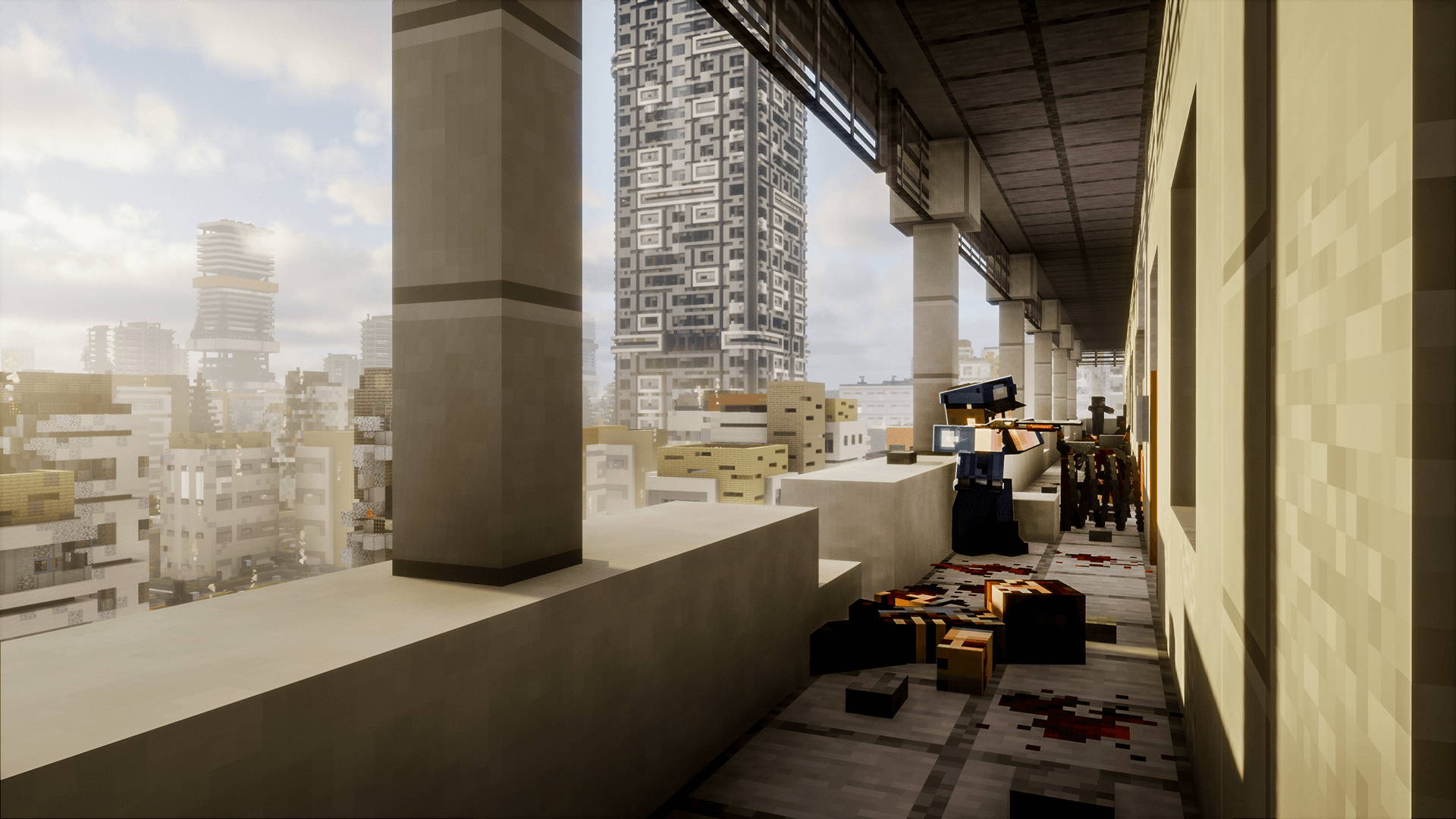
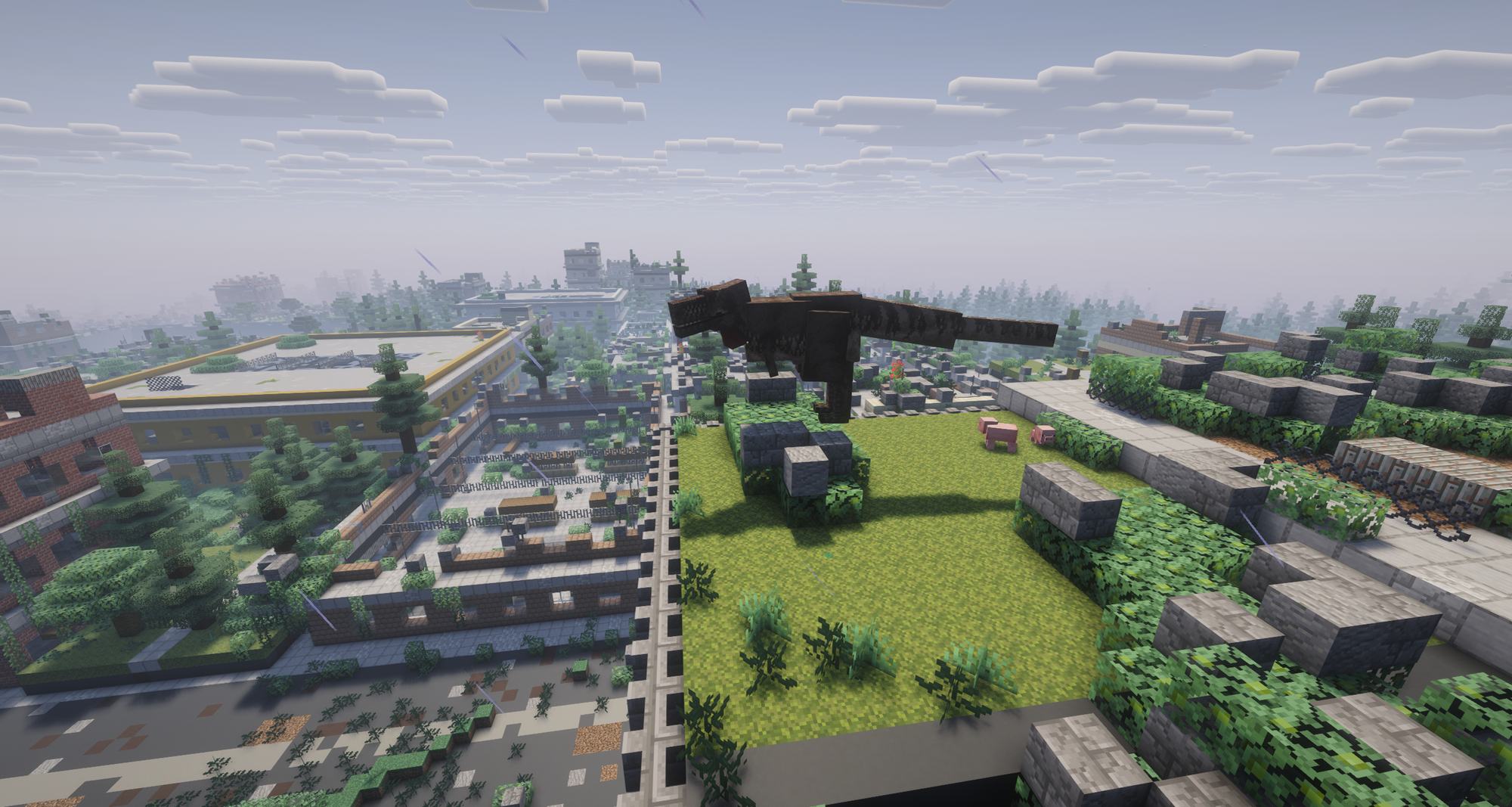
The Lost Cities is another example of extreme configurability. That mod allows custom datapacks, which can practically change everything in the cities. This configurability is fully on display in the very popular Deceased Craft modpack. That pack changes the cities in a very extensive manner.
Recently, I also made a few other mods that are also extremely configurable. Like Hazardous, which adds radiation and other dangerous effects to the Minecraft world, and Fancy Trinkets, which adds extremely configurable curio items that give all kinds of buffs to the player.
All these mods are particularly interesting to modpack developers, as they enable extreme customization. It allows them to build their pack as they want it."
"A long time ago, there was also a modpack that used RFTools Dimensions to create custom dimensions that the player had to traverse and solve quests in. That was also a pretty creative way to use my mod."
Between the split across loaders like NeoForge, Fabric, and Forge, and Mojang’s faster update cycle, modding feels more fragmented than ever. How are these ecosystem shifts affecting the community, and how do you decide which loaders and game versions are actually worth your time to support?
"I feel like it is unfortunate that there are so many mod loaders because it makes life harder for both the mod developer (what loader should he/she choose?) and the mod user. It basically fractures the Minecraft modding community and potentially limits the number of mods that can be used together, although recently, there have been a few solutions and adapters for that. I haven't checked those out personally. The various mod loaders also come with their own drama and events, which can make the environment sometimes feel toxic. I personally have been using NeoForge for a while now, and I am happy with it. Just recently, I did port Lost Cities to Fabric for version 26.2, though, because the demand was very heavy, but I doubt I'm going to do that for many of my other mods - maybe In Control and The One Probe. It's simply a matter of not having enough time for that.
Another thing I feel is detrimental to the modding community is the new, more frequent release cycle that Mojang adopted a while ago. It is nice that they are actively developing the game, but it makes it hard for mod developers to keep up with the changes and maintain their mods. For me personally, it has caused me to stop updating most of my mods to the latest and greatest simply because I have too many mods to maintain, and I don't have the time to keep up with the changes. That's why I focus on my most popular mods (like Lost Cities and In Control). I did manage to get the RFTools family mods updated to 1.21.1 with NeoForge, but that's as far as I got with those for now. The various versions of Minecraft also tend to make some versions more popular than others for no particular reason. For example, version 1.21.1 is much more popular than version 1.21.11. The latter seems to be ignored by most mod developers."
Modpacks rely heavily on your tools to craft unique player experiences. What is one of the most creative or unexpected ways you’ve seen a player or pack creator use one of your mods?
"One good example of that is the Deceased Craft modpack. This modpack heavily customizes Lost Cities, with cities I don’t even recognize anymore, even though it is my mod that generates them. I think that modpack truly shows what Lost Cities is about and what it can do if you (as a modpack developer) put in some effort.
A long time ago, there was also a modpack (whose name I forgot) that used RFTools Dimensions to create custom dimensions that the player had to traverse and solve quests in. That was also a pretty creative way to use my mod."
Beyond making mods, you’ve dedicated significant time to creating tutorials and helping new developers learn Minecraft modding. What motivates you to give back to the modding community in this way?
"I think teaching has always been something that I like doing. I really enjoy the idea that my knowledge is useful to others, too. I don’t exactly know why I enjoy it that much. I just do. Also, in the end, it benefits me as well. It makes it easier for people to make mods and follow good practices, and I can play with those mods as well.
Besides, I have found that I really enjoy making YouTube videos. I do that for my Minecraft and Vintage Story videos as well."
Now that you’ve conquered the top tier of the CF Legends program, what exciting projects, updates, or ideas are you currently working on?
"Oh, a ton actually! At this very moment, I’m actually working on a modpack for the first time. I don’t have much experience with that yet, but it’s something I have been wanting to do for a long time, so that’s something new for me. I also still have some plans for Lost Cities (which, honestly, has become one of my most active mods lately). And outside of Minecraft, I’m actually doing my first steps into Android game development, as mentioned in the previous question. So that’s something completely new as well.
I recently started working on a new tutorial series for NeoForge for my Youtube channel. I decided to do a special approach because I'm targeting both version 1.21.1 and version 26.2 in the same tutorial series. The tutorial videos themselves are currently done with version 1.21.1, but there are two GitHub repositories, and in the wiki, I have a special section for version 26.2 with the steps one has to do
to go from version 1.21.1 to version 26.2 (and all the intermediate versions). This essentially makes this a multi-version tutorial, which I think can be very useful for mod developers.
I currently have 4 tutorial videos done, and the 5th one is in progress - this one will explain how to work with energy by showing a simple generator and a pig spawner.
It will also show how to create a menu and a renderer for the generator. I have many more plans for future tutorials on various things a mod developer might need.
And this is something completely different - It's my first Android game. A simple yet relaxing game, called "Balls In Box", where you match 3 balls and make sure the box doesn't overflow. Supports the gyroscope (i.e., tilting and shaking the phone).
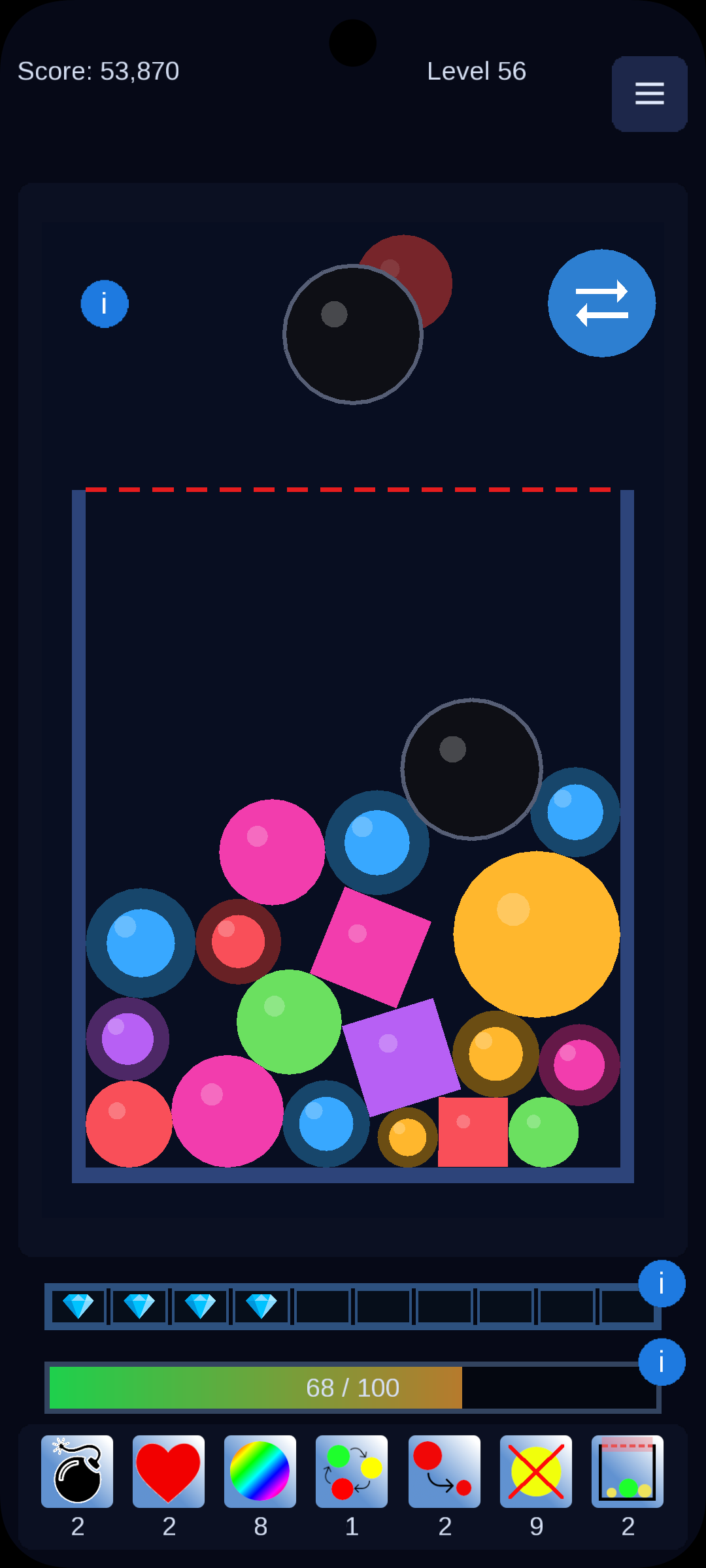
Balls In Box
Another Android game that I'm currently working on is "Gravity Hex". This is a more complex puzzle game in which you have to save a certain number of balls by first altering the terrain using the limited set of tools you are given. This game is currently in closed testing. Google requires a new app to be tested by at least 12 people for at least 14 days.
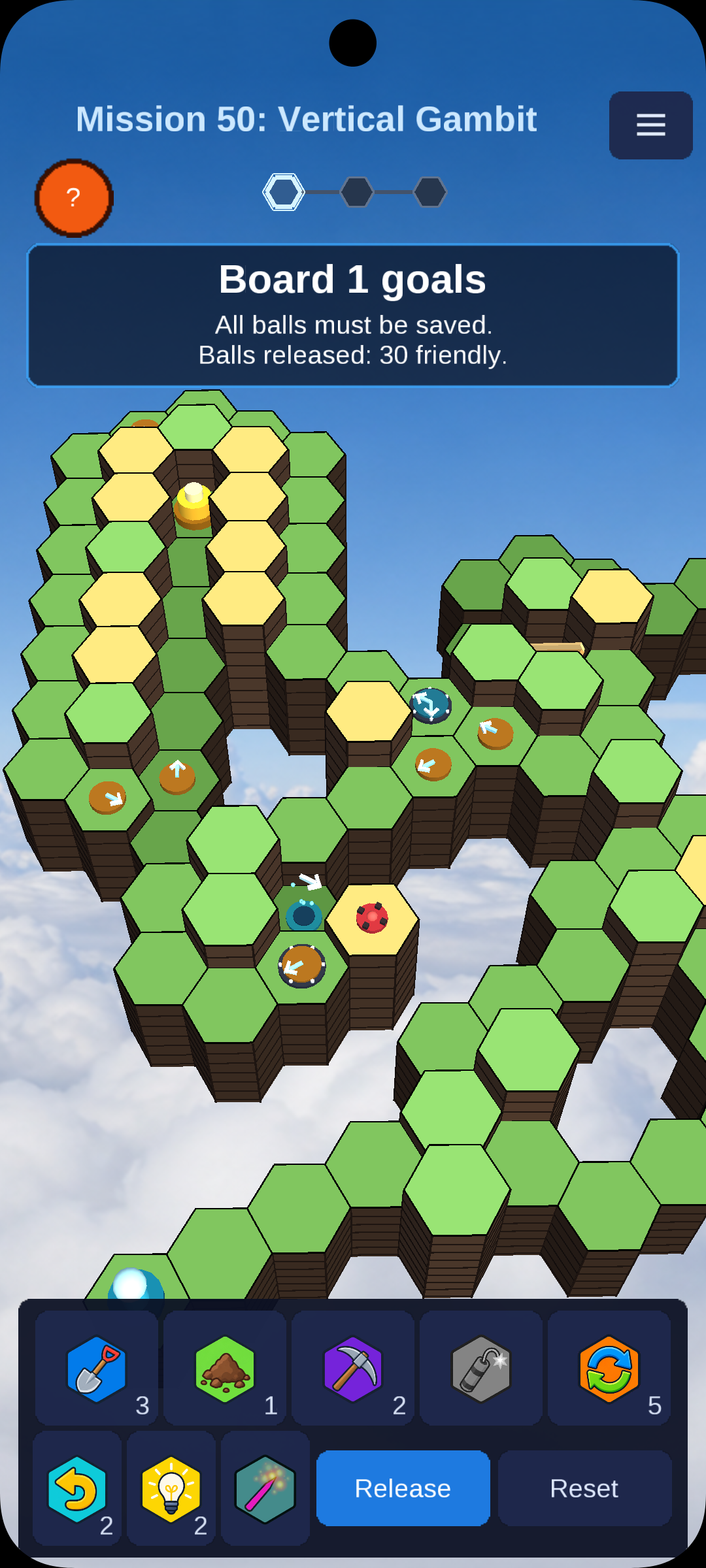
Gravity Hex (W.I.P.)
Besides that, I love working on other side projects as well. Maybe some of them will even get to the public one day. Who knows 🙂"
What advice would you give to aspiring mod developers on CurseForge who are just starting out at the Forgeborn tier and dreaming of reaching legend status?
"I think the most important part is to think about what you would like to play with yourselves. If you think a mod you want to make is going to be fun, chances are high that there will be others who might like it too. But to be honest, I think there is some luck involved as well. I got lucky that my first mods got popular at a time when people were actually looking for those kinds of mods.
What’s also important is to be responsive to your users. Listen to their feedback, consider new features that your users want, and be sure to try to fix bugs fast. I haven’t been very good at the latter myself in some cases, but it’s something a mod developer (or any developer for that matter) should work on."
Your RFTools suite, especially RFTools Dimensions - completely redefined how players think about endgame resource gathering and custom worlds. What was the original inspiration behind giving players the power to program their own dimensions?
"To be honest, for me, RFTools Dimensions started as a bit of a personal challenge. At that time, Mystcraft existed, and I always thought it was amazing how it could create those worlds. I was just inspired to try to do something similar. And at that time, I, of course, had RFTools, so that led to the idea of doing it in a more tech-like manner - and so RFTools Dimensions was born.
RFTools Dimensions was also the mod that gave birth to McJtyLib, as this was the first time I needed that common code for two mods."
A massive thank you to McJty for taking the time to share his insights, history, and passion with us. Reaching the Anvil God tier is an incredible milestone, and we’re honored to celebrate it alongside him.
If you want to support McJty, make sure to check out his CurseForge profile to download his iconic mods for your next world.
You can also head over to his official website for project news and documentation, and subscribe to his YouTube channel to learn modding from the master himself through his tutorials and devlogs!