Food in Minecraft is not just about filling the hunger bar. The best foods also give strong saturation, which is the hidden meter that runs out before your visible hunger starts dropping. That is why some foods keep you full much longer than others, even when their hunger values initially look close.
In this guide, we’ll break down the best vanilla foods for survival, which ones are worth farming, which foods are better left as emergency options, and how cooking changes their value. We’ll also look at food-focused mods that add cooking stations, recipe variety, crop expansions, and rewards for trying different meals.
How Food in Minecraft Actually Works
Your hunger bar has 20 points. Eating food restores some of those points directly. But saturation is what makes the real difference – it's an invisible buffer that runs down before your hunger bar moves at all. A food with high saturation value keeps you full throughout a lot of activity. A food with low saturation value means you'll be eating again soon.
The other factor is the actions your hunger bar supports. A full or near-full hunger bar slowly heals you. Sprinting, on the other hand, drains it faster. Once your hunger bar hits zero, you start taking starvation damage on Easy, Normal, and Hard. On Easy, starvation stops at 5 hearts. On Normal, it stops at half a heart. On Hard and Hardcore, starvation can kill you. "Peaceful" mode is the exception – your hunger bar does not drain and starvation damage is therefore not a thing.
The Best Vanilla Minecraft Foods to Try
Sweet berries will only carry you so far. To visit the truly exciting places in the game, you’ll need something with much more substance. If you’re not sure where to start, have a look at the top picks below:
- Cooked steak and porkchop are two of the best everyday foods in vanilla when you want high hunger restoration and strong saturation in one stack. Both restore 8 hunger points and 12.8 saturation – enough to keep you full through extended activity. Cows and pigs are also easy to farm and breed, making this a reliable food source once your base is established.
- Golden carrots restore 6 hunger and 14.4 saturation – the highest saturation of any food in the game. That means they keep you full longer than steak even though they restore fewer hunger points. They're expensive to mass-produce since they need gold nuggets, but they're worth keeping on hand for long dungeon runs or combat situations where you need sustained healing.
- Bread is the most practical early-game food. Three wheat craft one loaf, wheat is easy to farm, and bread restores 5 hunger with 6 saturation. It won't carry you as long as meat will, but it's fast and cheap to produce in bulk.
- Cooked chicken is a reasonable middle option at 6 hunger and 7.2 saturation. It's less efficient than steak but chickens are common, breed easily, and don't require breeding materials beyond seeds. Just don't eat raw chicken – it has a 30% chance of giving you the Hunger status effect on top of only restoring 2 hunger points.
- Baked potatoes restore 5 hunger and 6 saturation – similar to bread but potatoes are usually easier to grow in large quantities since they don't need replanting from seeds after harvest. A potato farm with a furnace nearby is one of the most low-effort food setups in early survival.
- Cooked salmon restores 6 hunger and 9.6 saturation, making it noticeably better than cooked chicken for saturation, though still below steak and cooked pork chop overall. Fishing or setting up a salmon farm near a river biome provides you with steady access.
- Suspicious stew is a special-case food rather than an everyday staple. It restores 6 hunger and 7.2 saturation, but its real value depends on the flower used to craft it. Some versions can give helpful effects like Saturation, Regeneration, Fire Resistance, or Night Vision, while others can give negative effects, so it is worth using carefully rather than treating every suspicious stew the same.
Foods to Avoid or Use Carefully
As in life, here you also can’t eat everything you lay your eyes on. Here are some edibles that are best avoided altogether.
- Raw meat is generally not worth eating once you have a furnace, smoker, or campfire. Cooked versions restore much more hunger and saturation, so it is almost always worth cooking the meat before eating it. Raw chicken specifically carries that 30% Hunger debuff chance as well. Hunger is a negative effect that makes your hunger bar drain faster, so rotten flesh can leave you worse off if you are moving, fighting, or sprinting right after eating it
- Rotten flesh has an 80% chance of giving the Hunger status effect and only restores 4 hunger. It's worth keeping as emergency food when nothing else is available, but not worth eating when better options exist.
- Spider eyes and poisonous potatoes both give poison or other negative effects and should generally be avoided as a food source.
- Sweet berries restore only 2 hunger, with especially low saturation on Java Edition. They work as an easy-to-farm food source in the very early game and can also be used for decoration or traps, but they are not a strong long-term food source.
On Cooking and Processing Your Food
A furnace or smoker turns most raw ingredients into significantly better food. Smokers cook food twice as fast as regular furnaces and are cheap to build: the recipe for it is one furnace surrounded by four logs in a crafting table.
Campfires can cook up to four items at once without fuel, but take 30 seconds per item.
The jump from raw to cooked is large enough that it's almost always worth the fuel cost. Raw porkchop, for instance, results in 3 points less hunger – cooked porkchop shaves off 8. That right here is the difference between a snack and a meal.
Mods That Expand the Minecraft Food System
Vanilla Minecraft has a few clear food winners, but mods can make the system deeper or easier to understand. Some add cooking stations and new recipes, some reward you for eating a wider diet, and others reveal food details that vanilla normally hides.
Below are a few food-focused mods worth trying if you want more than the usual steak, pork chop, and golden carrot diet.
AppleSkin
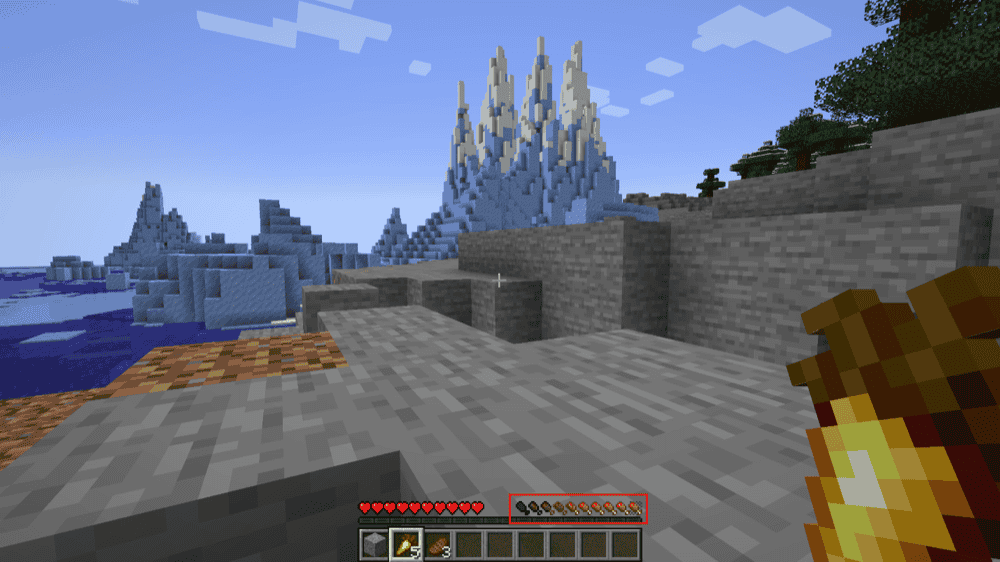
“AppleSkin” adds useful food and hunger information to the HUD without changing Minecraft’s food mechanics. It shows food values in tooltips, previews how much hunger and saturation a food will restore while you are holding it, and adds saturation and exhaustion information to the HUD and "F3" debug overlay.
“AppleSkin” makes hidden food mechanics easier to read while you play as well. If you are choosing between steak, golden carrots, cooked salmon, or food from larger recipe mods, the extra HUD information makes it easier to see why some meals keep you full longer than others. The mod is mostly client-side, but it needs to be installed on the server too if you want accurate saturation and exhaustion readings in multiplayer.
Farmer's Delight
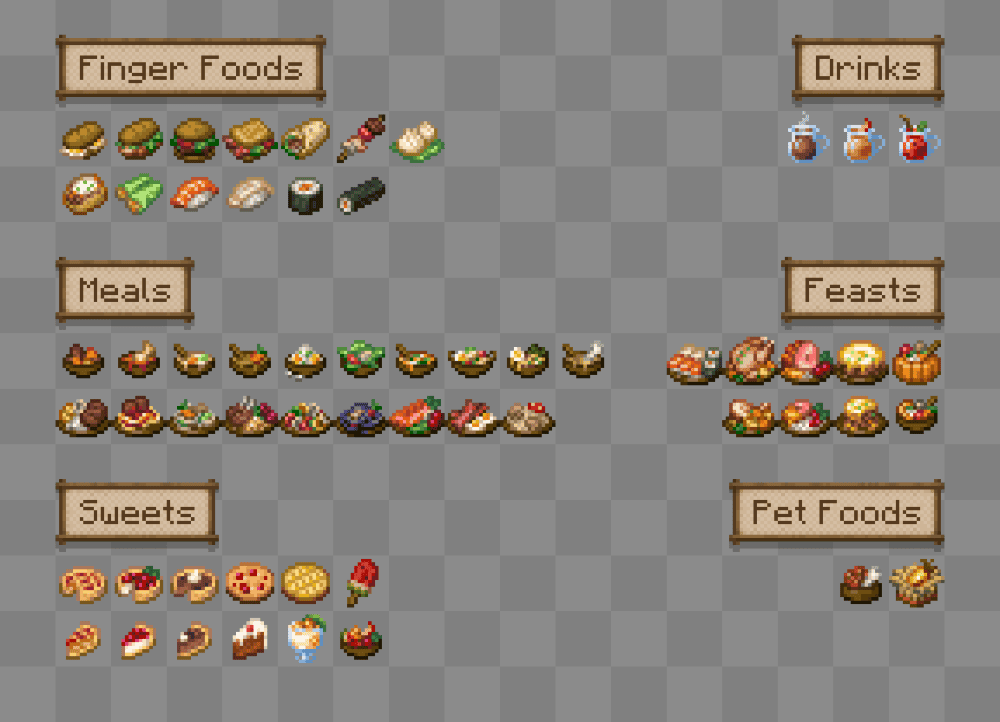
“Farmer’s Delight” gently expands Minecraft’s farming and cooking system with new crops, kitchen blocks, and meals that feel close to vanilla while giving food a much bigger role. It adds ingredients such as rice, cabbage, tomatoes, and onions, plus tools and stations like knives, cutting boards, cooking pots, skillets, and stoves.
“Farmer’s Delight” is especially useful if you want food to be something more than a quick hunger meter refill. The mod lets you prepare sandwiches, salads, stews, desserts, and larger meals by combining ingredients that might otherwise be ignored in vanilla, such as eggs, mushrooms, and beetroots. It also adds farming utilities like rich soil, straw, ropes, and decorative blocks, making it a strong pick for players who want a fuller cooking and farming loop. For a Fabric version, “Farmer's Delight Refabricated” by ChrysanthCow covers the same content on that loader.
Spice of Life: Carrot Edition
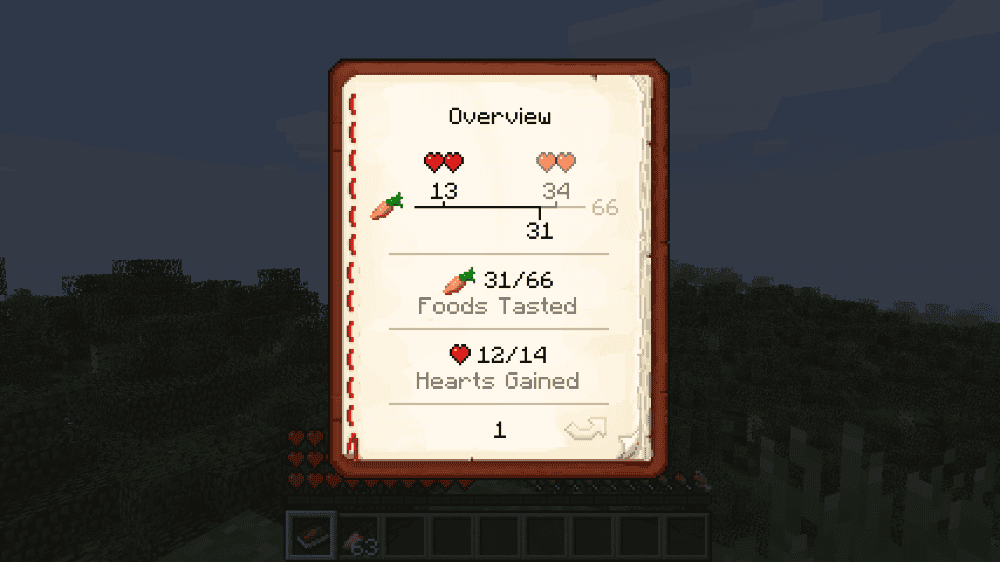
“Spice of Life: Carrot Edition” rewards players for eating different foods instead of punishing them for repeating the same meal. The mod tracks how many unique foods you have eaten, then gives permanent extra hearts when you reach certain milestones.
By default, players can grow from 10 to up 20 hearts by eating most non-poisonous vanilla foods, and the Food Book lets you track which foods you have already eaten and which ones are still missing. It also works well in modpacks with larger food mods, since every extra meal gives players more to discover and more progress to chase after.
Croptopia
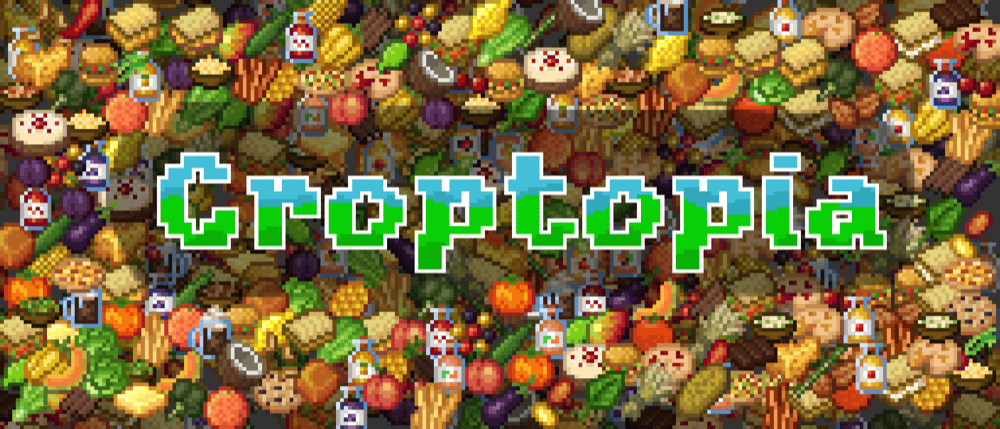
“Croptopia” adds a much larger farming and food system with 58 ground crops, 26 tree crops, and over 250 foods. Instead of relying on the same few vanilla meals, you can build farms around new ingredients, harvest fruit from trees, and turn those crops into a wider range of recipes. “Croptopia” also includes a guide book for players who want recipe help without using “JEI” or “REI” which are recipe-viewer mods that let you search items and check crafting uses in-game.
Note: Crop collection for this mod depends on the Minecraft version you are playing. In 1.16 and 1.17, crop seeds can come from breaking tall grass and ferns in biomes like plains, swamps, savannas, forests, and taigas. In 1.18 and above, crops are collected from wild crops instead of grass drops. Fully grown crops and fruit on trees can be harvested by right-clicking them, and fruit saplings are crafted by combining harvested fruit with a sapling.
How to Install Minecraft Mods
You can install the above mods automatically using the CurseForge app or manually by placing the mod files within your game's mods folder. Both methods allow you to easily add custom features and enhancements into your Minecraft experience.
If you want to learn more, you can read our detailed guide on how to install Minecraft mods.
Common Issues and Quick Fixes
Hunger bar empties too quickly even after eating
You're likely eating foods with low or moderate saturation. Saturation runs out before the hunger bar visually drops, so foods like berries, bread, or baked potatoes can leave you hungry again faster during active play than steak, cooked porkchop, golden carrots, or cooked salmon. Switch to cooked steak, golden carrots, or cooked salmon – all high in saturation – and you'll find you’ll eat far less often.
The food I eat isn't healing me
Natural healing from food only happens when your hunger bar is at 18 or above, which is 9 full shanks. If you're sitting at 15 hunger points, you won't passively heal even if you've just eaten. We recommend keeping the bar topped up by eating before you need to rather than waiting until it drops.
Spice of Life isn't tracking the foods I eat
Open your Food Book (crafted from a book and a carrot) to check your progress. The mod only tracks foods you eat while it is installed – foods eaten before installing it won't be retroactively counted. Additionally, confirm that the mod is installed on the server if you're playing multiplayer and not just the client.
Croptopia crops aren't appearing in the world
Croptopia fruit trees and some crops generate naturally in new chunks. If you're playing in an existing world, you'll only find them in newly generated areas outside what was already loaded in before installing the mod. To fix this, explore beyond your current border or start a new world to see them generate properly.
My game crashes on launch after adding a food mod
A crash right after adding a mod usually means that the file does not match your Minecraft version, it was made for a different loader, or a required dependency is missing. Check the mod’s "Files" tab and make sure the version matches your setup before launching again.
If you install mods through the CurseForge app, all required dependencies are usually handled during installation. If you install mods manually, you need to check the mod page yourself, download any required dependency mods, and place those files in your "mods" folder, too.
If you added several mods at once, remove the new mod files from your mods folder one by one and re-launch the game after each change. When the game starts normally again, the last file you removed is probably the one causing the crash.