Breeding turtles in Minecraft is straightforward once you know the rules, but a few quirks – especially the home beach mechanic and egg hatching – catch most players off-guard. Get those right and you'll have a reliable turtle scute farm running with minimal effort.
What You Need to Breed Turtles
Turtles breed with seagrass and nothing else. You harvest seagrass from the ocean floor using shears. Without shears, it just disappears when broken as you need at least two pieces – one for each turtle.
Finding Turtles for Your Scute Farm
You can usually find turtles on sandy beaches in groups, often near the waterline. They're not rare but they're not everywhere either. The key thing to remember before you try to relocate them to your home base is that the beach where a turtle spawns or hatches becomes its home beach. We’ll explain why this matters in a bit.
How to Breed Turtles Step by Step
Step 1: Find Two Adult Turtles
Start with two adult turtles as baby turtles can't breed. Find two on the same beach or nearby beaches – moving them is fine, but keep in mind that their home beach is where they used to live.
Step 2: Feed Each One Seagrass
Hold seagrass in your hand and right-click each turtle. Hearts appear above them when love mode activates. Both need to be fed – hearts on just one means only that turtle entered love mode.
Step 3: Watch for the Pregnant Turtle
After feeding both of them, one of the turtles will become pregnant – you would notice this as it would look slightly larger than normal. This turtle will then start walking back toward its home beach – the specific beach where it originally spawned or hatched.
This is the part most players miss. The pregnant turtle has to be near its home beach to lay eggs. If you move it far away, it might wander for a long time trying to get back, or not lay eggs at all if it can't find suitable sand within range.
Tip: If you're setting up a dedicated farm, the simplest approach is to breed turtles directly on their home beach without moving them first.
Step 4: Let the Turtle Lay Its Eggs
Once near sand on its home beach, the turtle will dig and deposit a cluster of 1 to 4 turtle eggs. It will do this by bouncing rhythmically on the sand for several seconds before the eggs appear.
Important: Avoid walking, jumping, or landing on the eggs once they're placed. Turtle eggs can break when players or mobs step on them, while turtles themselves can walk over their own eggs safely.
Step 5: Protect the Nest!
This is the other thing that tends to trip players up. Zombies and their variants actively seek out and trample turtle eggs at night. If your nest is unprotected, expect to come back in the morning to find the eggs gone.
The easiest fix is to fence the nest immediately after the eggs are laid. Put walls or a fence around the area at least 2 blocks high. For extra safety, you could also add torches or lanterns inside the enclosure to prevent mob spawning in the protected zone. Finally, a glass roof over the top will keep things tidy while letting you watch the eggs from the outside.
Step 6: Wait for the Eggs to Hatch
Turtle eggs hatch after 3 cracking stages. Each stage happens during random ticks, which are the game's background update checks for certain blocks near players. They are not a fixed countdown, so eggs may crack on one night and then seem quiet for a while.
On Java Edition, turtle eggs are most likely to crack during a short late-night window: roughly 3:36 AM to 4:33 AM in Minecraft time. This is not real-world time – it means the in-game clock is near the end of the night, just before morning.
Since one full Minecraft day lasts 20 real minutes, that window is only about 48 real seconds for the player. On average, turtle eggs hatch after 4 to 5 nights.
While we're at it, here are the main hatching rules to keep in mind:
- Stay nearby. Eggs only progress when a player is within 128 blocks. If you leave the area entirely, the eggs freeze in place until you come back.
- Don't sleep through the night. Sleeping skips the period when eggs crack. If you go to bed every night, the eggs will barely progress. Either AFK near the nest at night or just don't sleep while waiting on the eggs to do their thing.
- Eggs only hatch on sand, red sand, or suspicious sand. If you move turtle eggs with a Silk Touch tool, place them back on one of those blocks so they can continue toward hatching.
Step 7: Tend to the Baby Turtles
All eggs in a cluster hatch all at once. Baby turtles are tiny, and you will usually see them head toward the nearest source of water right away. They don't drown and can survive on land, but they're vulnerable to foxes, drowned, skeletons, and most other hostile mobs. Because of this, we recommend keeping the enclosure walls up until they've fully grown.
Step 8: Collect Your Scutes
Baby turtles grow into adults in about 20 real-time minutes – one full Minecraft day. Each baby drops one turtle scute when it matures. Feeding a baby seagrass speeds up growth by 10% per piece, so if you're in a hurry, a handful of seagrass can cut down the wait noticeably.
What to Do With Turtle Scutes
You’ve got a bunch of scutes – now what? Here are a few ideas to get you started:
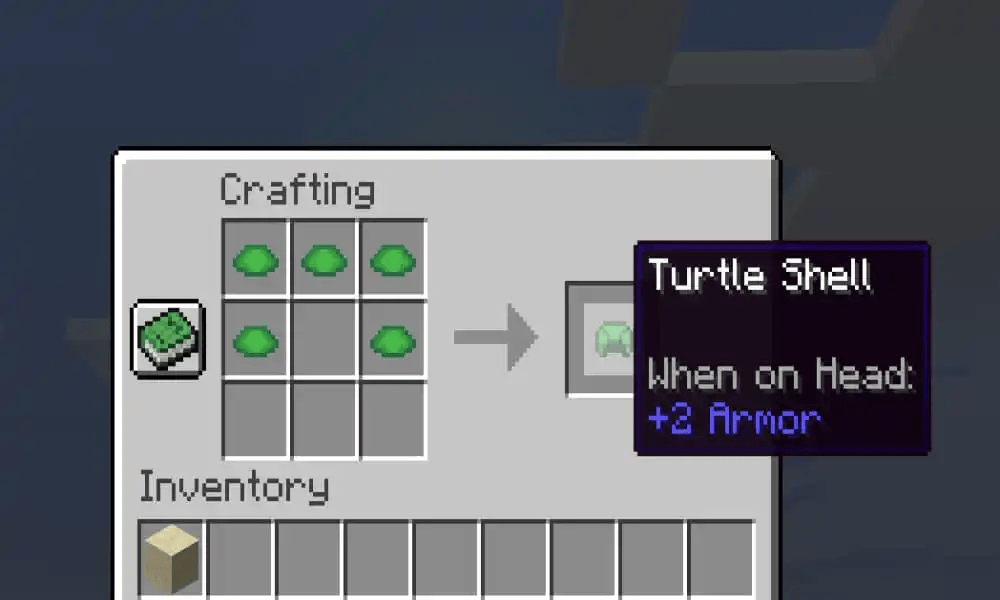
- Turtle shell helmet: crafted from 5 turtle scutes in the same pattern as any other helmet. This helmet provides two armor points and gives you the Water Breathing effect for 10 seconds while you're submerged – automatically refreshing its cooldown each time when you re-surface and go back underwater.
- Potion of the Turtle Master: brewed by adding a turtle shell to an awkward potion in a brewing stand. It gives Slowness and Resistance, making it useful when you want extra damage reduction and do not need to move quickly. Since turtle shells are crafted from turtle scutes, your turtle farm has another useful purpose beyond the helmet itself.
- Repairing and trading: turtle scutes can repair turtle shells in an anvil. They can also be sold to expert-level cleric and leatherworker villagers for emeralds, depending on the edition and trade options.
Key Java vs. Bedrock Edition Differences
The mechanics are nearly identical on both editions. The main practical difference is the breeding cooldown – Java Edition makes turtles wait 5 minutes between breeding sessions while Bedrock Edition has a cooldown of about 90 seconds. If you're running a scute farm and wondering why your turtles won't breed again immediately on Java Edition, that's the reason.
Egg hatching behavior is broadly similar on both editions, though the exact tick probabilities for cracking are better documented for Java.
Mods That Add More Turtle Content
Once you have a turtle farm up and running, vanilla Minecraft gives you turtle scutes, eggs, baby turtles, and the turtle shell helmet. Mods can expand that turtle theme with more armor options, extra underwater bonuses, and new turtle-like mobs for rivers, swamps, and shoreline builds.“Full Turtle Armor” gives turtle scutes more use by completing the turtle armor set, while “Alex’s Mobs” adds creatures like Terrapins and Alligator Snapping Turtles for players who want more turtle-style life in their world.
Alex’s Mobs
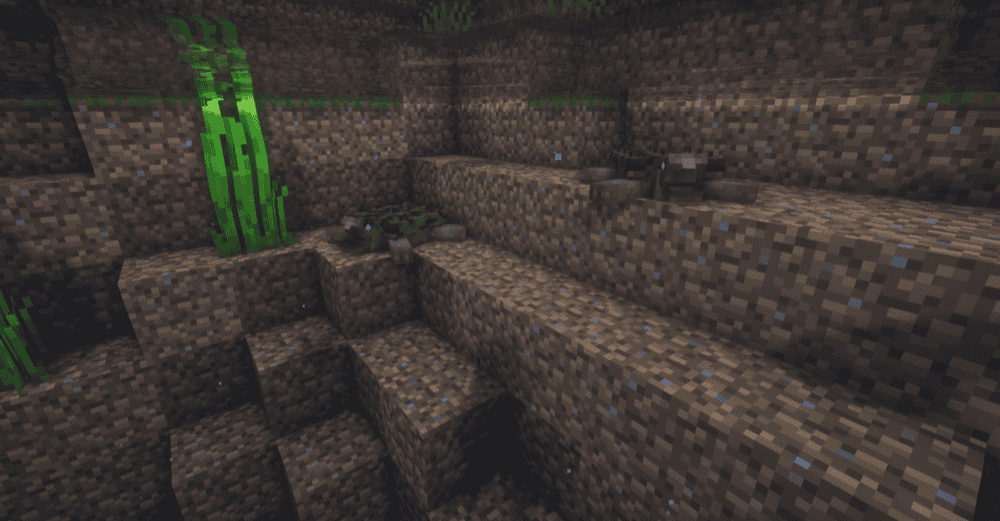
“Alex’s Mobs” adds a large collection of new animals and creatures, including turtle-like mobs that fit naturally beside vanilla turtles. Terrapins are small river turtles that can live on land or in water, can be collected in a bucket, and bred with seagrass.
Terrapins add more variety to turtle habitats because they can appear in several colors, including green, black, brown, Painted Batagur, and Red Eared Slider styles. Breeding them can mix those colors into many possible combinations, which makes turtle ponds, rivers, and aquatic builds feel more alive.
The mod also includes Alligator Snapping Turtles – defensive swamp and mangrove swamp mobs that can be bred with raw cod and sheared for seagrass, with a small chance to drop a Spiked Scute when mossy.
Full Turtle Armor
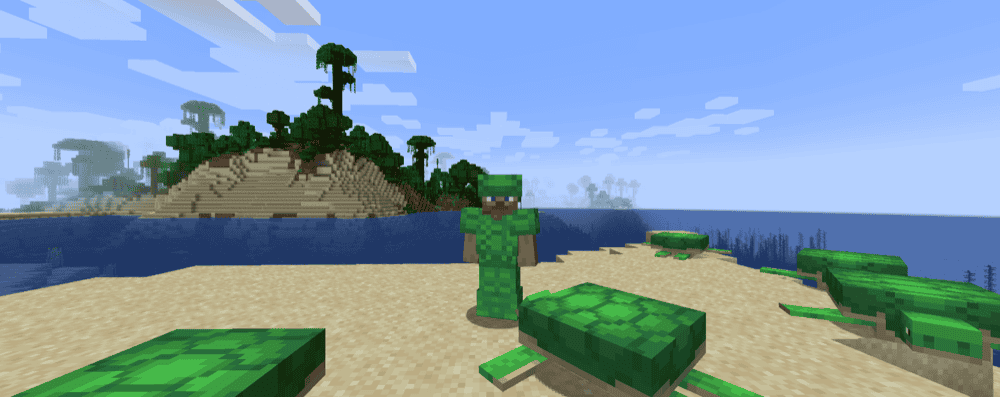
“Full Turtle Armor” completes Minecraft’s turtle armor set by adding turtle shell pieces beyond the vanilla helmet. Instead of stopping at one turtle shell helmet, you can build toward a full turtle-themed armor set using the turtle scutes you collect from breeding and raising baby turtles.
Each added shell piece gives extra configurable Water Breathing time: the chestplate and leggings add 15 seconds each, while the boots add 10 seconds. When worn with the vanilla turtle shell helmet, the full set can provide 50 seconds of Water Breathing, plus Night Vision and Dolphin’s Grace while submerged. That makes the mod useful for underwater building, ocean monument runs, and longer seagrass-gathering trips.
How to Install Minecraft Mods
You can install the mods above through the CurseForge app or manually by placing the correct mod files in your Minecraft mods folder. The CurseForge app is the easier option for most players, while manual installs require you to check the Minecraft version, loader, and required dependencies yourself.
For a full walkthrough, read our detailed guide on how to install Minecraft mods.
Common Issues and Quick Fixes
The pregnant turtle isn't laying eggs
It's likely looking for sand near its home beach. If the turtle was moved far from where it originally spawned, it may be trying to navigate back. Bring it back to its home beach area and make sure there's sand within 9 blocks.
For future generations, you can move turtle eggs with a Silk Touch tool and hatch them at your farm location, so the babies treat that new beach as their home beach. Building a farm directly on the beach where you find the turtles avoids this entirely.
My turtle eggs disappeared overnight
The unfortunate reality is that zombies have likely trampled over them. Even a single zombie can destroy an unprotected nest if given the opportunity.
To avoid this, build a fence enclosure around the eggs immediately after they've been laid, add lighting inside to stop mobs from spawning inside the enclosed area, and make sure the walls are at least 2 blocks high so zombies can't step over them.
The eggs aren't progressing after several nights
Check whether you are within 128 blocks of walking distance from the eggs – if nobody's nearby, they won’t reach the hatching stage.
Additionally, confirm that you're not sleeping through the nights – sleeping skips the hatching window. Stay in the area at night instead to let the eggs tick through their cracking stages.
My baby turtles disappeared after hatching
They’ve likely moved toward water immediately and may have traveled surprisingly far. They're also small enough that they're easy to miss. Make sure to check the water bodies nearby before panicking.
Baby turtles are also vulnerable to most hostile mobs – foxes specifically – so if your area wasn't fully lit and enclosed, the babies may have been killed before you could spot them.
My game crashes after adding a mod
A crash right after adding a mod usually means the file does not match your Minecraft version, it was made for a different loader, or a required dependency is missing. Check the mod’s "Files" tab and make sure you downloaded the correct version for your setup.
If you added several mods at once, remove the new mod files from your mods folder one by one and relaunch the game after each change. When the game starts normally again, the last file you removed is probably the one causing the problem.