A wide plain wants a stronghold keep around a courtyard. A cliff wants towers that lean out over the drop. A frozen peak wants walls that match the snow. Every site suggests its own castle, and picking the right one is half the build.
To help you pick a design, we've gathered ten castle ideas, from a stone-brick keep on a quiet Plains biome to a Nether brick castle behind a moat of lava. One can sit on a snowy peak where natural lightning never strikes, and another floats in the open sky.
Each one comes with its materials, a build order, a pro tip or two, and the mistakes to avoid, as well as a few mods to round out the list.
1. The Classic Stone-Brick Castle
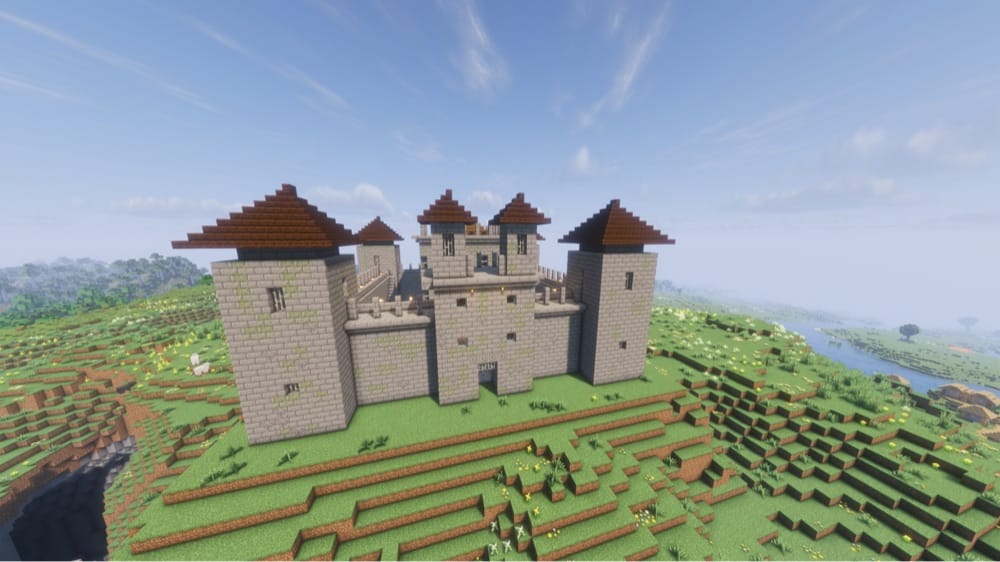
This is the textbook castle build: a curtain wall – the long outer wall that links your towers – with a tower at each corner, a gatehouse over the entrance, and a keep, the main stronghold, in the courtyard. It suits almost any flat site, such as a Plains biome or a Meadow plateau.
- Materials you will need: plain and mossy stone bricks with stairs, slabs, and walls, a few cracked and chiseled stone bricks for texture, an iron door with a button or lever (iron doors cannot be opened by hand), spruce or dark oak for roofs and shutters, and lanterns.
- Recommended build order:
- Raise the curtain wall and corner towers.
- Cap the wall with an outward overhang and stone brick walls for battlements (the notched edge along the top).
- Build the gatehouse around the iron door.
- Light every floor and the walkway along the wall.
Pro Tip for Your First Stone-Brick Castle
Spiders climb straight up walls, but they do not climb on the underside of blocks, so an outward overhang along the top should keep them from climbing over.
Common Stone-Brick Castle Mistakes to Avoid
- Stones are not enough to stop a creeper explosion. Stone bricks have a blast resistance (how well a block survives explosions) of 6, and a creeper explosion can break blocks with a blast resistance of up to 12.16.
- On Hard difficulty, using a wooden door for the gatehouse will not always be enough to stop mobs from breaking in.
2. The Cliffside Castle
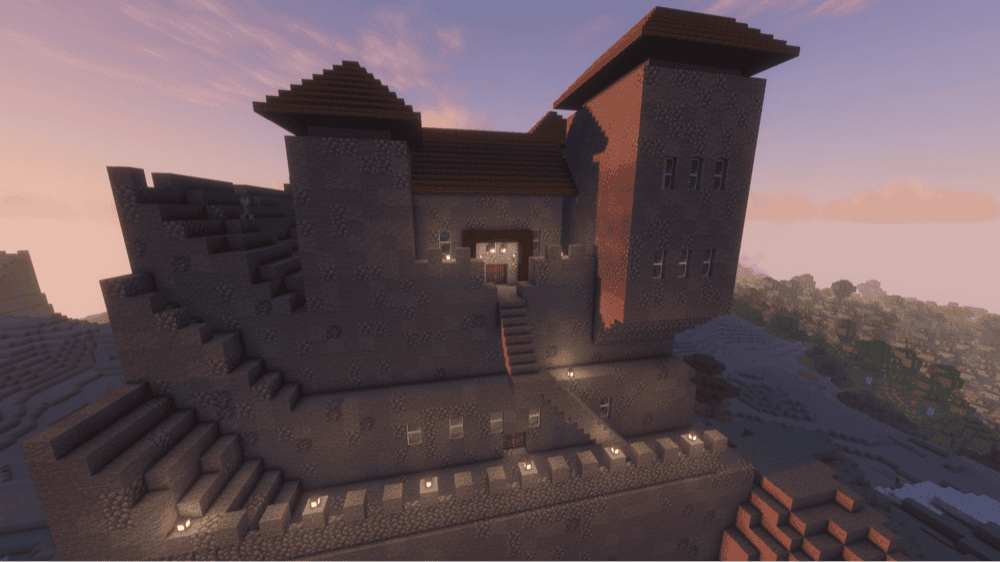
A cliffside castle uses the terrain itself as its foundation, whether that is a mountain face or the edge of a deep gorge.
For the mountain version, Jagged Peaks, Frozen Peaks, and Stony Peaks are the biomes to look for, since they can all rise as high as "Y" 256 – the cap for natural terrain. The highest block you can place sits at "Y" 319, which leaves about 63 blocks of headroom for towers.
- Materials you will need: stone, cobblestone, or andesite with matching stairs and slabs, spruce logs and planks, ladders or scaffolding, a water bucket (water cancels fall damage), leather boots (they let you walk on top of powder snow), and lanterns.
- Recommended build order:
- Carve the lower halls and ledges into the rock.
- Raise the towers and line every ledge with walls.
- Light the interior and roofs.
Pro Tip for Your First Cliffside Castle
We recommend not standing still at an open edge, since goats can ram a single unmoving target within 4 to 16 blocks every 30 seconds to 5 minutes, and the knockback can push you off a ledge.
Other Things to Know
- Adding a lightning rod – a block that draws lightning strikes toward itself – on Jagged Peaks or Frozen Peaks is a waste of copper as lightning does not strike naturally where it snows.
- Be careful not to walk onto powder snow without leather boots. It looks almost the same as regular snow, but you’ll sink into it and start to freeze.
3. The Moat Island Castle
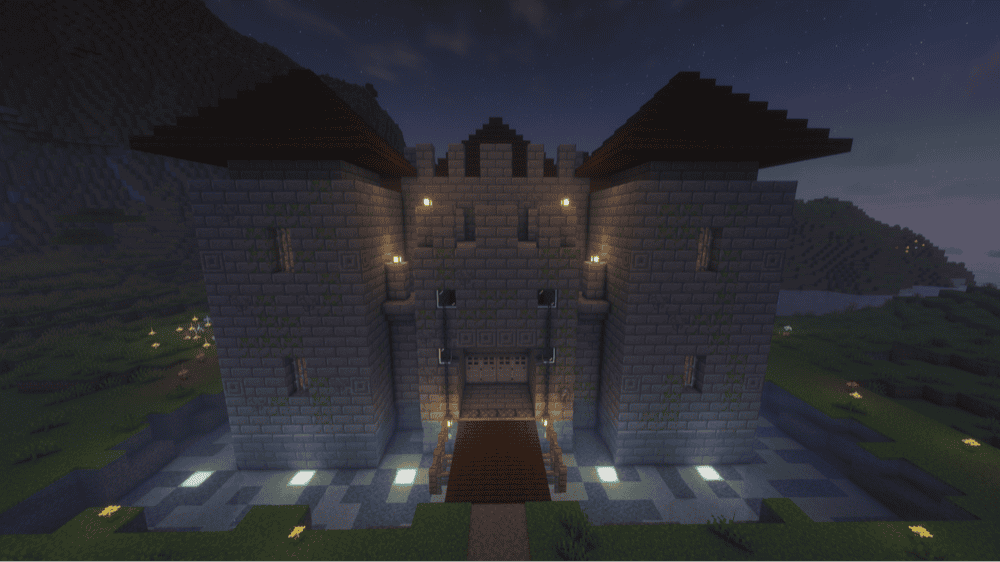
As the title suggests, water does the work here, though a moat is more of a speed bump than a wall, since water slows mobs down without stopping them. An explosion that goes off in water does no block damage at all, so a creeper that blows up while standing in the moat leaves your walls alone.
In Java Edition, a moat in a River biome can also spawn drowned – zombies that live underwater – if the water is dark and at least 2 blocks deep.
- Materials you will need: stone bricks and mossy stone bricks, sand or gravel to raise the island, sticky pistons with a lever and redstone dust (they slide the bridge blocks in and out), iron chains, sea lanterns, and a boat.
- Recommended build order:
- Raise the island with sand or gravel.
- Build the wall up from the waterline and add the drawbridge.
- Light the water and the island.
Pro Tip for Your First Moat Island Castle
Sea lanterns work underwater and give off light level 15. In Java Edition, water does not dim block light (the light from torches, lanterns, and similar blocks) any more than air does, so a few of them will light the moat as well as dry land.
Top Moat Island Castle Mistake to Avoid
If we had to name one, it is counting on the moat to keep mobs out. Hostile mobs still spawn on most solid blocks of the island wherever the block light is 0.
4. The Deepslate Gothic Castle
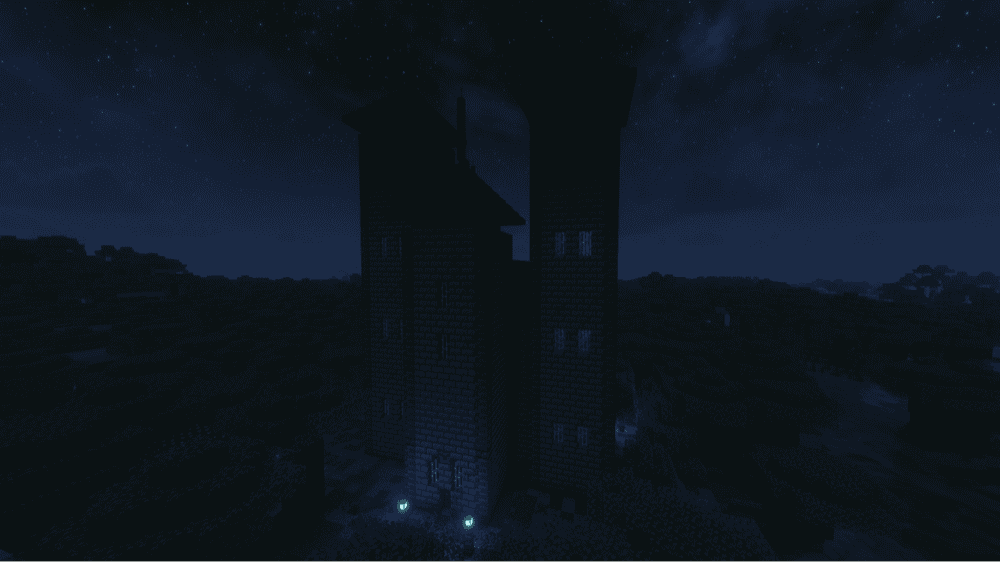
A gothic castle swaps warm colors for a black-and-grey palette. Deepslate bricks, deepslate tiles, polished blackstone bricks, and tuff bricks all come with stairs, slabs, and walls, so tall spires and battlements are easy to shape.
A Dark Forest biome makes a fittingly gloomy site, but its dense canopy lets hostile mobs spawn there during the day, so a good approach is to clear the trees and light the ground around your walls.
- Materials you will need: deepslate bricks and tiles with their stairs, slabs, and walls, cracked deepslate bricks for weathering, polished blackstone bricks (made from Nether blackstone) or tuff bricks for trim, dark oak or spruce for roofs, iron bars, and soul lanterns and candles.
- Recommended build order:
- Mine deepslate below "Y" 0 and turn it into polished deepslate, bricks, and tiles.
- Raise tall narrow towers.
- Top them with spires of stairs and walls, then light them.
Pro Tip for Your First Deepslate Gothic Castle
A soul lantern gives off light level 10 against 15 for a regular lantern, and a single lit candle gives 3, so we recommend placing them closer together. Four candles of the same color in one block give light level 12.
Common Deepslate Gothic Castle Mistakes to Avoid
- Think twice before letting the inside stay dark. Hostile mobs spawn on most solid blocks wherever the block light is 0, so every unlit corner can spawn them.
- Deepslate doesn’t hold up better against creepers. It has the same blast resistance of 6 as stone bricks and is only slower to mine.
5. The Floating Sky Castle
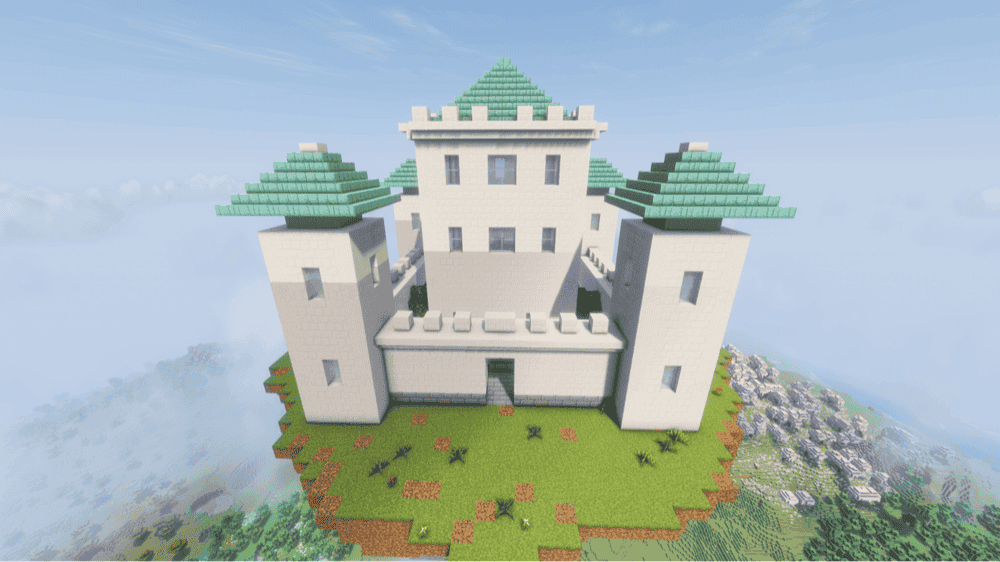
Natural terrain stops at "Y" 256, clouds drift at about "Y" 192, and the highest block you can place sits at "Y" 319, which leaves roughly 63 blocks of open sky above the tallest peaks.
The open air around the island is making sure no mob can ever wander closeby, and keeping every block constantly lit makes it impossible for hostiles to ever exist anywhere near the castle.
- Materials you will need: scaffolding or ladders, cobblestone, stone, or dirt for the island body, stone bricks or quartz for the castle, a water bucket (for the trip down), lanterns, and a bed.
- Recommended build order:
- Climb a scaffolding tower to your height.
- Lay the island's underside in blocks that do not fall.
- Raise the castle and light every surface.
Pro Tip for Your First Floating Sky Castle
Jump to climb up and sneak to climb down. Breaking the bottom scaffolding block will break all the ones sitting on top at once and will drop them as items.
Common Floating Sky Castle Mistake to Avoid
Do not build the island from sand or gravel. Both keep falling until they land on a solid surface, which in this case is the ground far below.
6. The Desert Sandstone Fortress
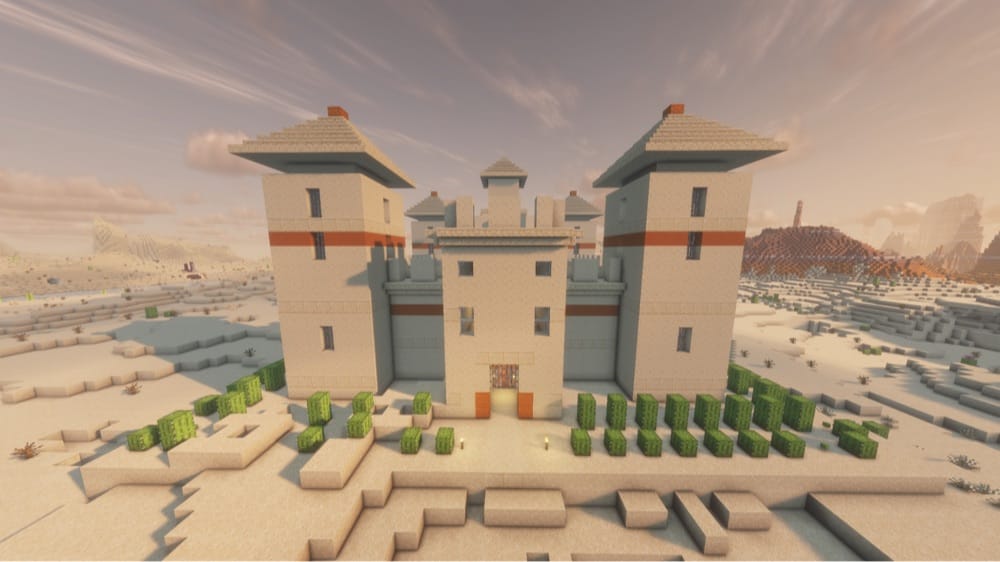
A Desert hands you sandstone for free, since it sits under sand that is generally four blocks deep. No rain ever falls there either, so there is no natural lightning to worry about.
Smooth sandstone, which you get by smelting sandstone, has a blast resistance of 6 against 0.8 for the regular block, so it makes a much sturdier outer wall. A staggered ring of cactus on the sand around it adds a second layer, since cactus damages players and mobs that touch it.
- Materials you will need: sandstone and smooth sandstone, a stonecutter (it turns sandstone into stairs, slabs, and walls), cactus, terracotta (from a Badlands biome or smelted from clay), and red sandstone made from Badlands red sand.
- Recommended build order:
- Dig through the sand to the sandstone layer for your foundation.
- Raise the outer walls in smooth sandstone.
- Trim with stonecutter shapes.
- Plant a ring of cactus on sand around the outside, leaving a gap between each one.
Pro Tip for Your First Desert Sandstone Fortress
A cactus deals half a heart of damage every half-second and destroys any item that touches it, so make sure to keep your own drops well away from the ring.
Other Things to Know
- Do not place cactus against a wall or against another cactus. A cactus breaks when a solid block touches it from the side, so every one needs an open block on each side.
- Unlike most other biomes, the zombies in the desert do not burn under the sun.
7. The Ice Castle
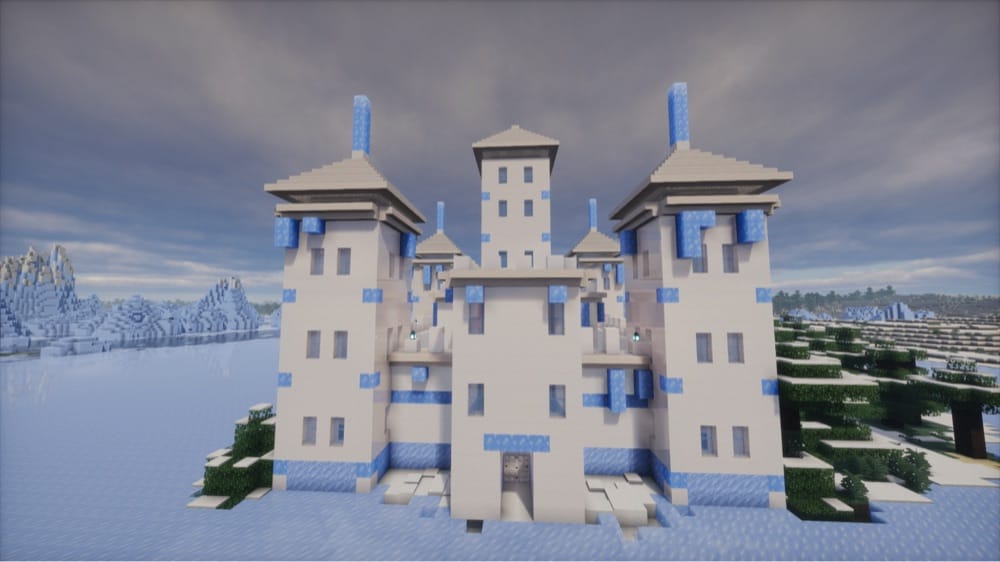
This castle is built around melting. Snow blocks, packed ice, and blue ice never melt, while regular ice and snow layers melt under light from torches, furnaces, and other light sources, though sunlight leaves them unaffected. A regular torch can melt snow layers within 2 blocks and ice within 3, but soul torches and soul lanterns generate less light and don't melt snow nor ice.
With that said, we recommend building the walls from the blocks that never melt and lighting the castle with soul lanterns.
- Materials you will need: snow blocks, packed ice, blue ice, white concrete or smooth quartz with their stairs and slabs, light blue or white stained glass panes, and soul lanterns.
- Recommended build order:
- Lay the base in packed ice or snow blocks.
- Raise the walls in white concrete or smooth quartz.
- Set the stained glass windows, then light it with soul lanterns.
Pro Tip for Your First Ice Castle
White concrete received stairs and slabs in Java Edition version 26.3, so a white wall can now also have a stepped roofline.
Common Ice Castle Mistakes to Avoid
- Mining ice without Silk Touch (an enchantment that makes a block drop itself) will drop nothing.
- Ignoring strays can be dangerous – the arrows from these skeletons inflict the Slowness effect, which considerably slows your movement. They spawn under open sky in Snowy Plains and Ice Spikes biomes.
8. The Cherry Blossom Castle
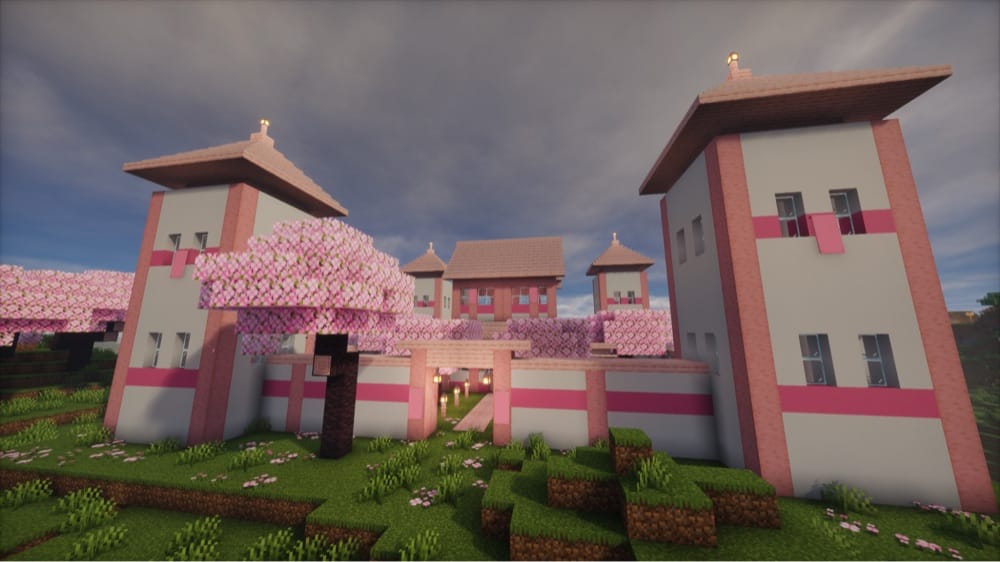
If you want a castle that looks like it came out of a storybook, a Cherry Grove biome is the place to build it. The biome generates on mountain slopes, plateaus, and valleys, and cherry comes with a full wood set that includes planks, stairs, slabs, fences, doors, and trapdoors.
Pink petals stack up to four per block, so a patch of them covers courtyard ground in pink.
- Materials you will need: cherry logs, stripped logs, planks, stairs, slabs, fences, doors, and trapdoors, white or pink concrete with matching stairs and slabs (concrete does not burn), cherry leaves, pink petals, and pink banners.
- Recommended build order:
- Find a plateau or slope and clear space.
- Build the shell in concrete framed with stripped cherry logs, roof and detail in cherry wood.
- Carpet any grass or dirt in the courtyard with petals and hang banners.
Pro Tip for Your First Cherry Blossom Castle
Leaves you place yourself never decay, so they can work as hedges and canopies anywhere on the castle, and shears collect them.
Common Cherry Blossom Castle Mistakes to Avoid
- Do not place wood or wool near lava or fire, since cherry wood, planks, logs, leaves, and wool all burn.
- Breaking a bee nest by hand. Bee nests generate on the sides of cherry trees, and without Silk Touch, the nest drops nothing and the bees come out angry.
9. The Japanese-Style Tiered Castle
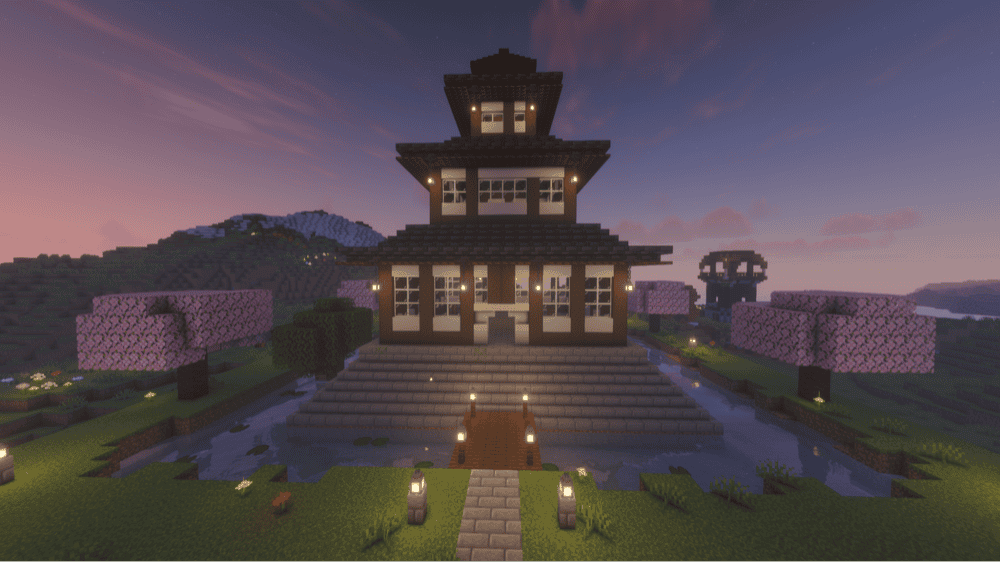
With this one, stairs and slabs do the heavy lifting. Stacked tiers of walls – white in the classic Himeji style, red in many fantasy builds – sit on a stone base, each capped with a dark roof whose corners turn upward.
That look comes from placing stairs upside-down, which you do by aiming at the bottom of a block or the top half of its side. Note that stairs of any material can join into corners as long as they face the same way up, so a deepslate tile roof can corner into dark oak.
- Materials you will need: stone bricks for the base, white concrete or smooth quartz for the walls, stripped dark oak or spruce logs for the frame, deepslate tiles with stairs and slabs for roofs, trapdoors for the eaves (the roof edges that hang over the walls), and lanterns hung from iron chains.
- Recommended build order:
- Dig the moat and fill it with water.
- Lay the stone-brick base.
- Raise the first white tier framed in logs.
- Roof it with the outer row of stairs upside-down.
- Repeat the tier and roof at a smaller scale as you go higher.
Pro Tip for Your First Japanese-Style Tiered Castle
Use bottom slabs – the ones that sit in the lower half of a block – for shallow roof sections, since mobs cannot spawn on them.
Top Japanese-Style Tiered Castle Mistake to Avoid
The one to watch for is using white wool for the walls. Wool is highly flammable and weak against explosions, while white concrete gives a similar white without the risk of catching fire.
10. The Nether Castle
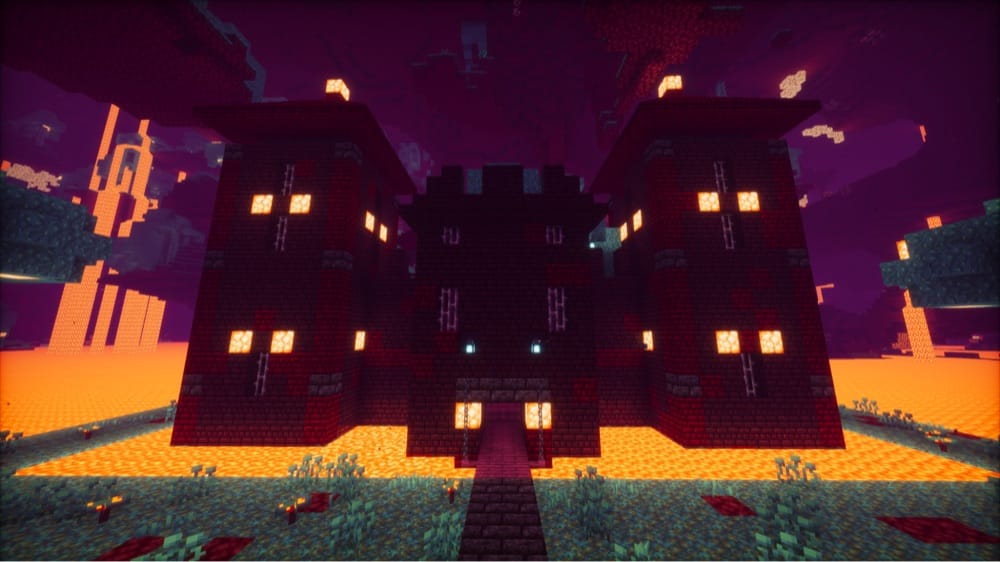
In the Nether, the building blocks do half the defending. Nether bricks and red Nether bricks are non-flammable and immune to ghast fireballs, and crimson and warped planks do not burn like other wood.
Water placed from a bucket disappears in the Nether, so lava takes over as the moat. Lava also spreads 7 blocks from its source here against 3 in the Overworld, so make sure to leave extra room around it. The Warped Forest biome is the calmest site, since hostile mobs do not spawn naturally there outside of Nether Fortresses and Bastion Remnants.
- Materials you will need: Nether bricks with stairs, slabs, walls, and fences, blackstone or polished blackstone bricks, crimson or warped planks and doors, lava buckets, shroomlights or lanterns, and a respawn anchor (it sets your spawn point in the Nether).
- Recommended build order:
- Pick your biome.
- Raise the walls and towers in Nether bricks or blackstone.
- Fit the doors and floors in crimson or warped wood.
- Dig the lava moat and illuminate the interior.
Pro Tip for Your First Nether Castle
Wither skeletons, which spawn only in Nether fortresses, stand 2.4 blocks tall and cannot fit through 2-block-tall openings. If you build near a fortress, we recommend keeping your doorways exactly 2 blocks high.
Common Nether Castle Mistakes to Avoid
- Sleeping in a regular bed will not work in the Nether. It explodes instead, so a respawn anchor charged with glowstone blocks is the way to set your spawn there.
- Assuming light makes the castle mob-proof. Ghasts, magma cubes, and hoglins spawn at any light level, which matters anywhere outside the Warped Forest.
Minecraft Mods for Finishing Your Castle
Vanilla blocks get you most of the way, but mods can add the windows, trim, and lighting that make a castle feel finished. The five mods below aim to cover those details, and one of them places ready-made castles in your world for you to study.
And if you want even more options, check out our list of the best Minecraft building mods.
Macaw's Windows / Macaw's Fences and Walls / Macaw's Lights and Lamps
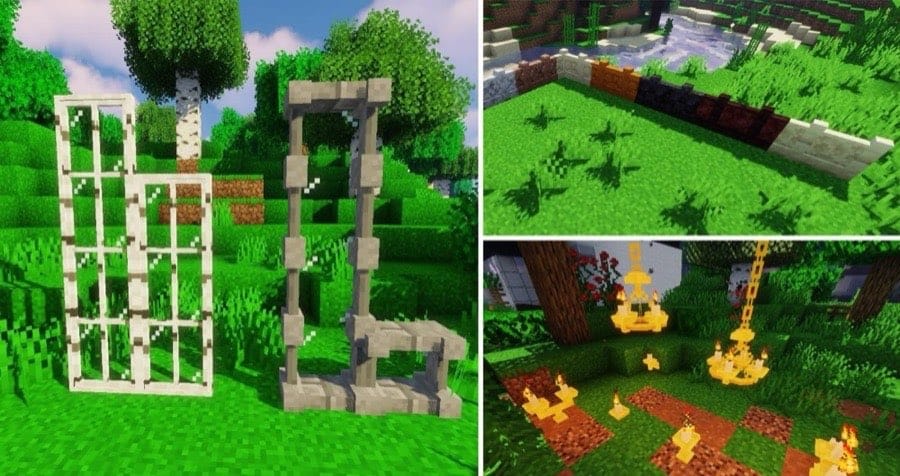
Each of these three mods covers a different part of a castle.
- “Macaw's Windows” adds gothic windows and arrow slits along with shutters, curtains, and mosaic glass, so a plain stone wall gets openings that suit a castle.
- “Macaw's Fences and Walls” adds new stone walls, stone gates, and a cheval de frise, a defensive barrier that deals damage on collision.
- “Macaw's Lights and Lamps” adds chandeliers, candle holders, and wall lanterns for a great hall, and everything can be switched on and off by holding shift and right-clicking.
Stoneworks
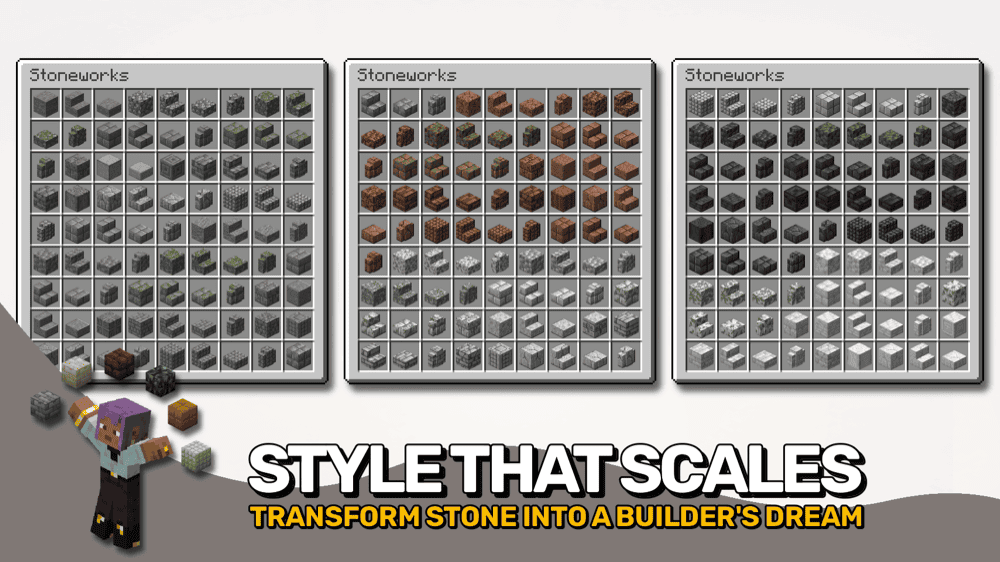
“Stoneworks” is for the moment your castle walls start to look like one flat block of stone. The mod adds cobbled variants, bricks, tiles, pillars, and shingles for the stone you already build with, and most of the new blocks also come as stairs, slabs, and walls.
Everything is made in a stonecutter, so a stack of stone turns into trim quickly.
Castle Shift
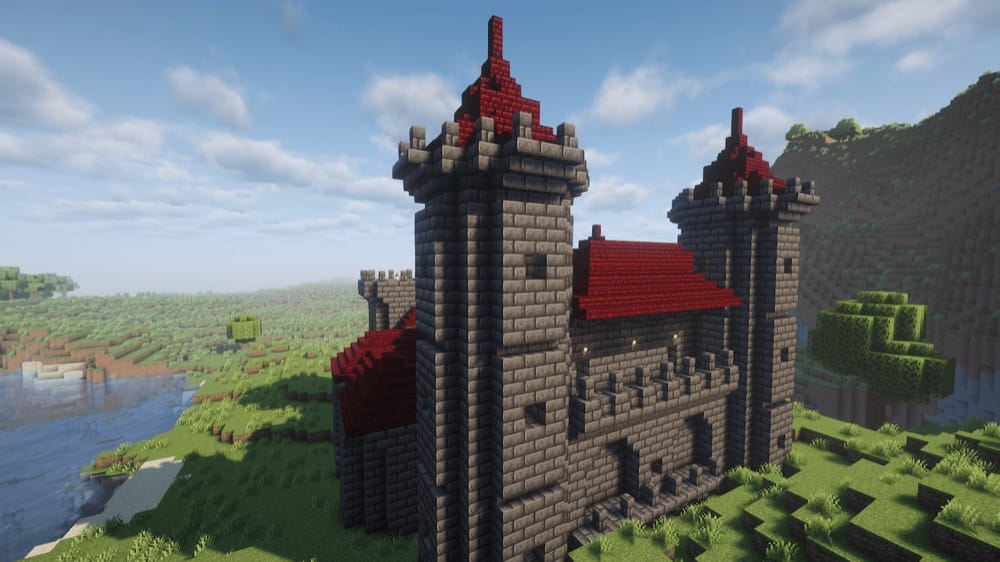
“Castle Shift” hands you a castle to study before you build your own. The mod adds multi-story castles with walls, towers, and corridors to your generated world, and each one gets its roofs, walls, and stairs from materials picked at random.
Like with other world generation mods, “Castle Shift” only places castles in terrain that has not been generated yet, so areas you have already explored will stay as they are.
How to Install Minecraft Mods
You can install the above mods automatically using the CurseForge app or manually by placing the mod files within your game's mods folder. Both methods allow you to easily add custom features and enhancements into your Minecraft experience.
If you want to learn more, you can read our detailed guide on how to install Minecraft mods.
Common Issues and Quick Fixes
My castle looks flat from a distance
From far away, flat walls, flat roofs, and a single block type can look unfinished even when the details are right.
We therefore recommend mixing plain, mossy, and cracked stone bricks, or whatever variants your main block has, and building towers at different heights so the skyline is not a straight line. Recessing windows by a block and trimming wall tops with stairs or slabs can add some depth as well.
For more build project ideas once your castle is standing, check out our detailed guides on the best Minecraft bridge ideas and what to build in Minecraft.
Mobs keep spawning inside my castle
Most hostile mobs spawn on solid blocks wherever the block light is 0, and block light drops by one for every block of distance away from its source. The dark spots are usually corners behind walls, walkways, tower floors, and gatehouse tunnels.
A tried and tested approach is to light them or floor them with bottom slabs, carpet, or glass, since mobs cannot spawn on any of those.
Lightning keeps setting my roof on fire
A lightning rod that is the highest block in its column redirects natural lightning within 128 blocks in Java Edition. On Normal and Hard difficulty, though, the bolt can still start fires in a 2-block radius around the air above the rod.
To fix this, put the rod at the top of your highest roof and keep wood, leaves, and wool at least 3 blocks away from the air above its tip.
My game crashes on startup after installing mods
A startup crash usually means one of three things:
- The mod file does not match your Minecraft version.
- The mod was made for a different loader.
- A required dependency is missing.
Check that you installed the correct Forge, Fabric, Quilt, or NeoForge file for your profile, then look at the mod page for any required files, especially for Fabric API on Fabric profiles and for Quilted Fabric API on Quilt profiles.
תגובה אחת בסך הכול
התגובה 👏 נוספה על ידי Alex Petkov בתאריך 16.10.2026, 08:00 UTC
_המשימה הוקצתה למשתמש alex@aloha.digital_